
Last updated November 21, 2026
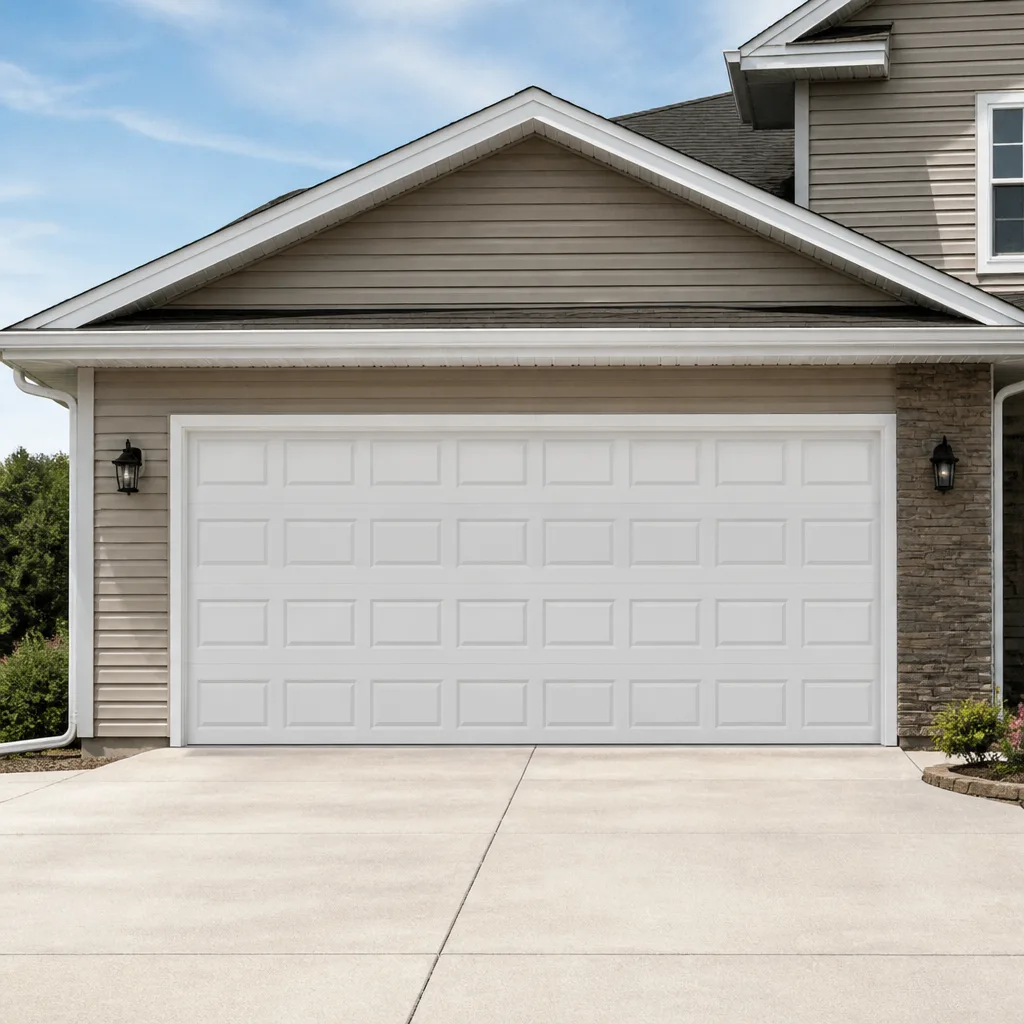 Raised-panel steel
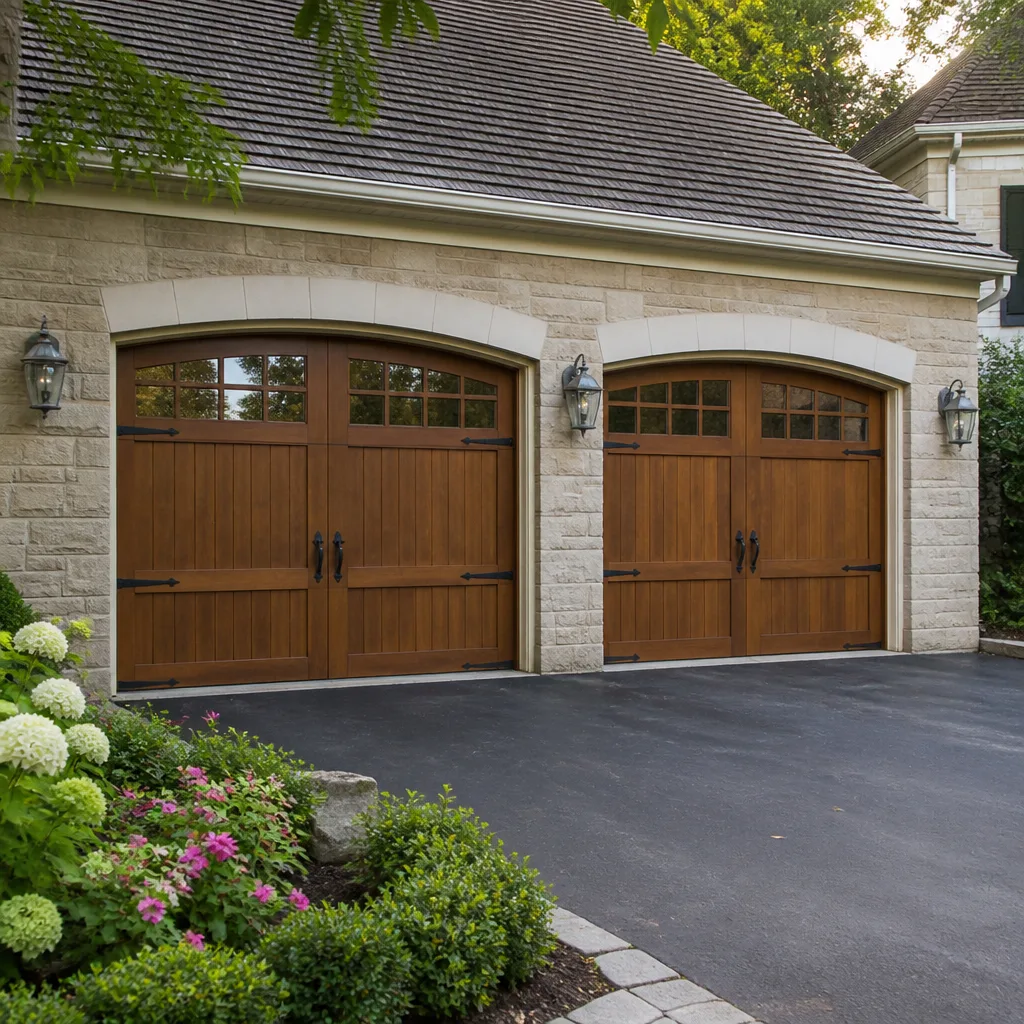 Carriage house
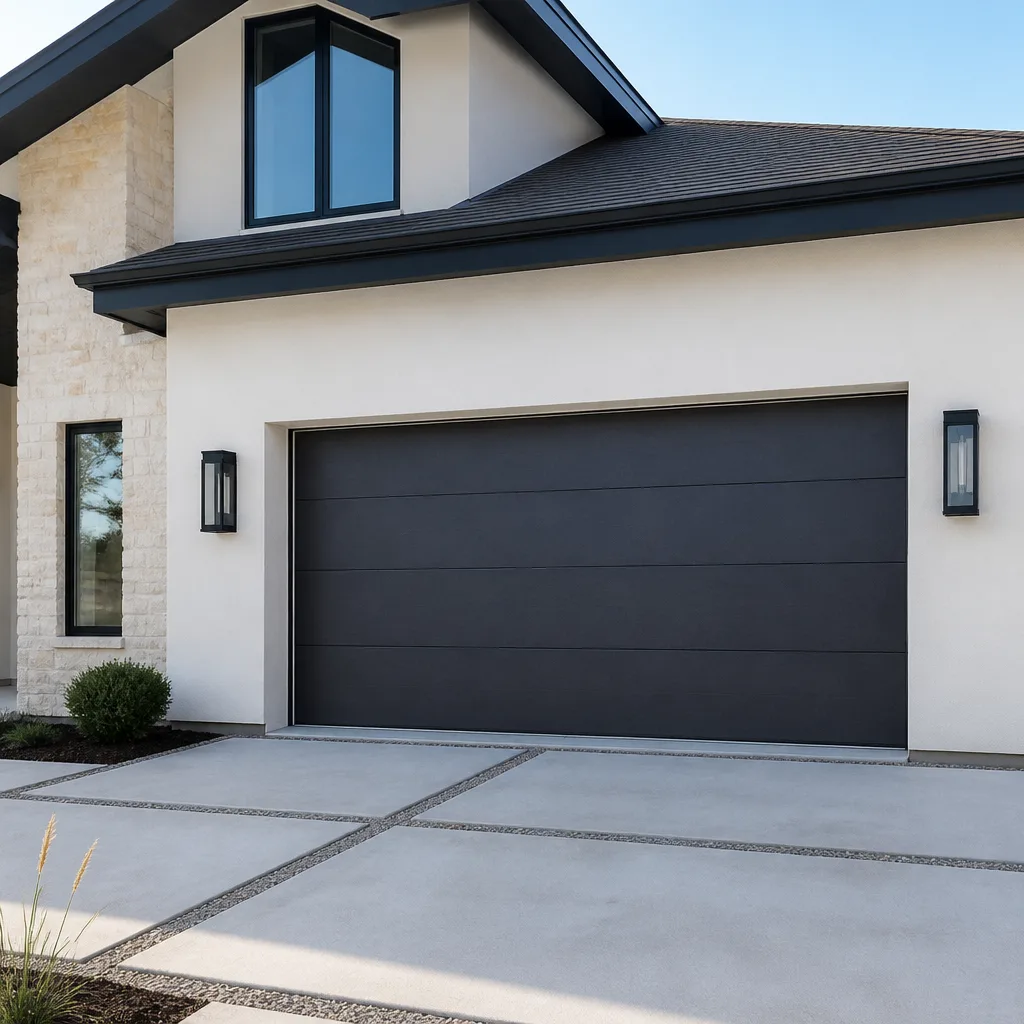 Modern flush
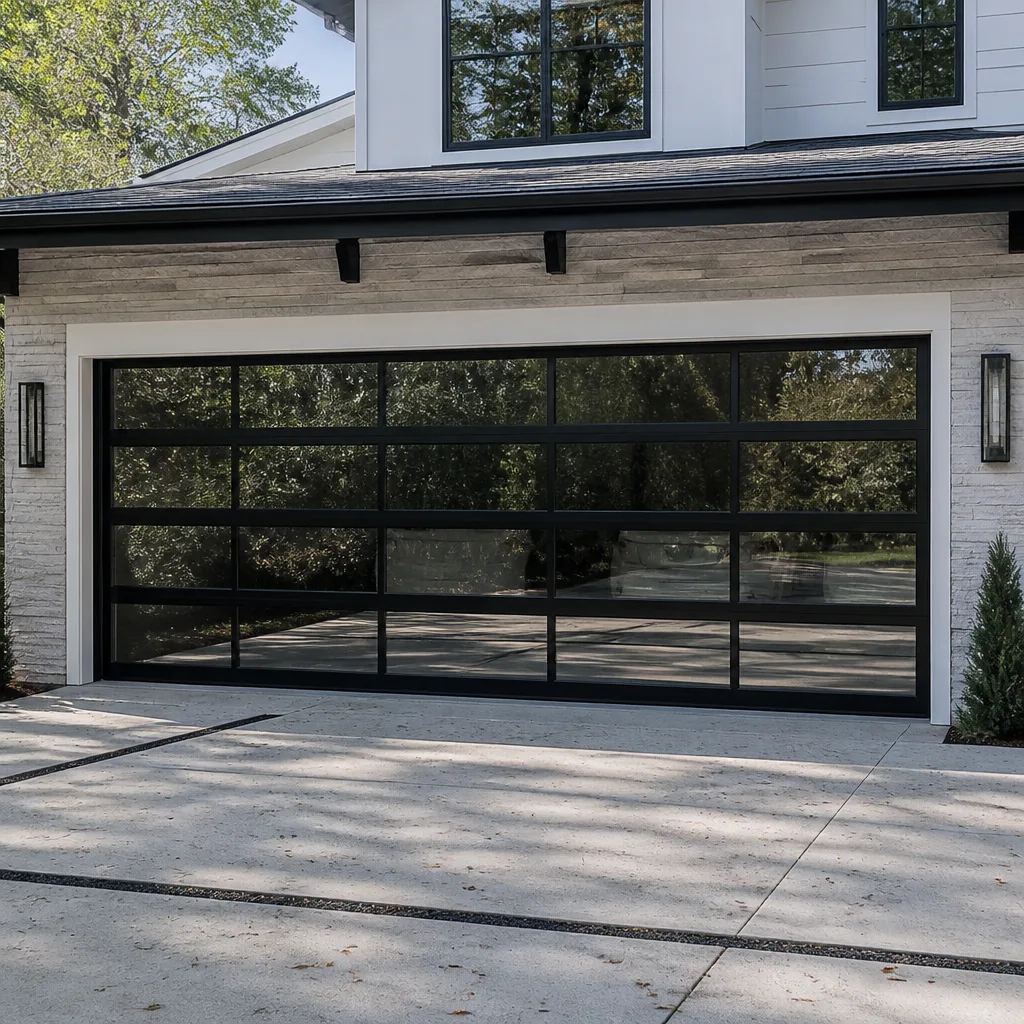 Full-view glass
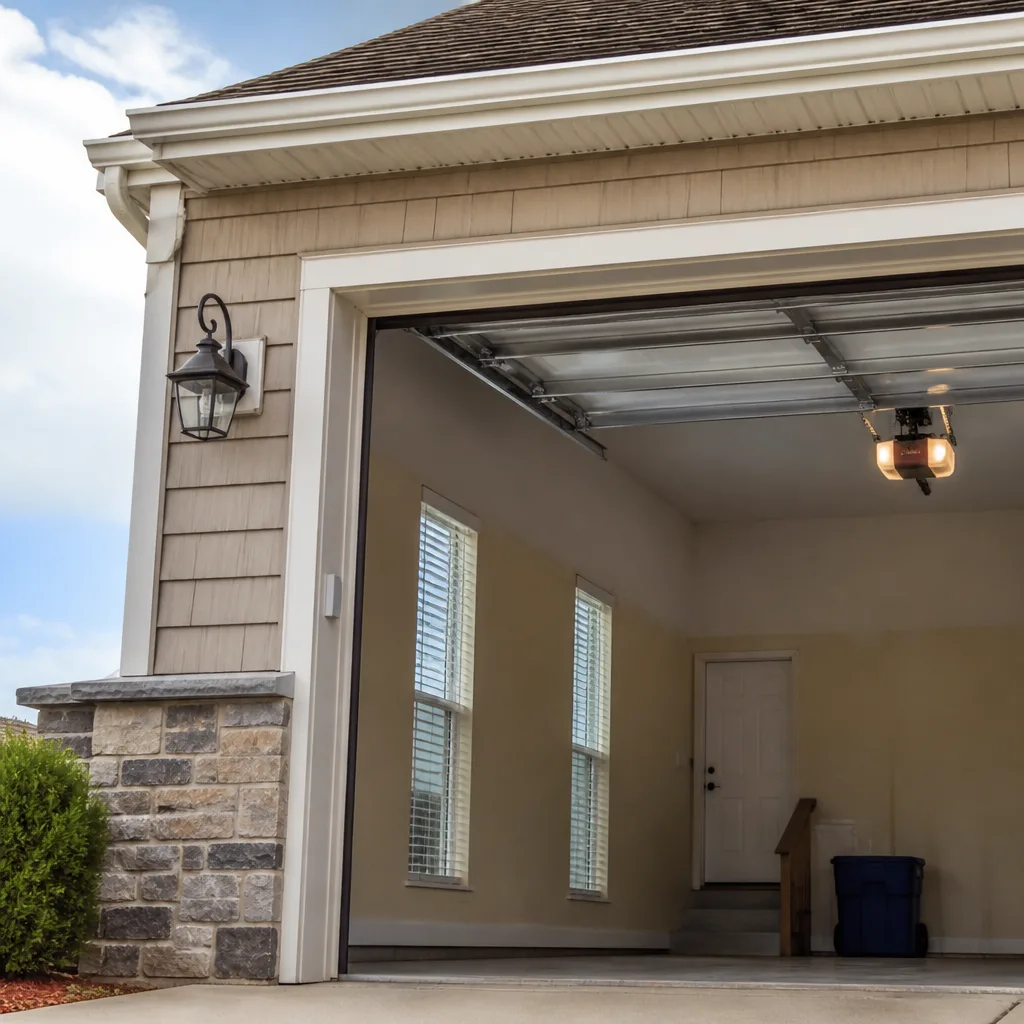 LiftMaster openers
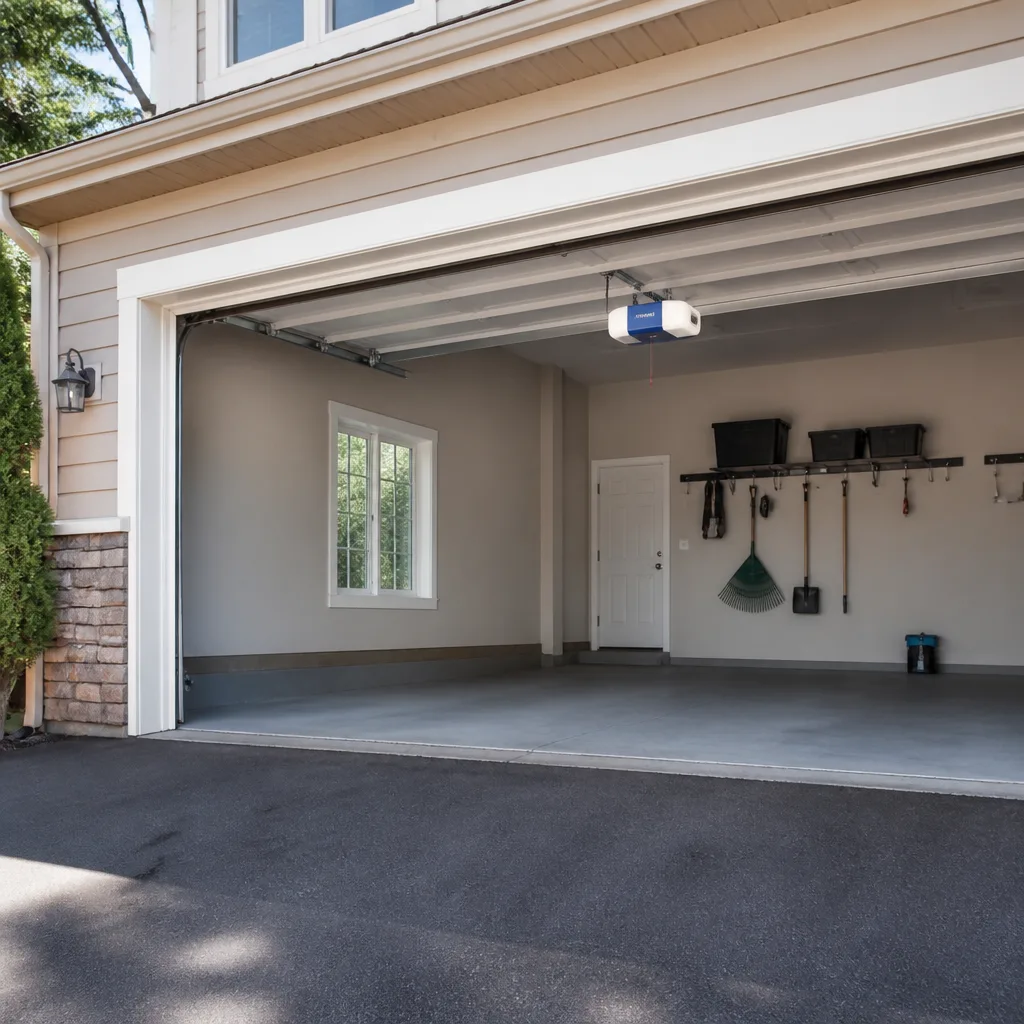 Chamberlain openers
Full 25-point door and opener safety check with every visit - springs, cables, rollers, tracks, and your LiftMaster or Chamberlain opener included
You get a price before we start. It does not change when the pro arrives.
Get your free estimateGarage Door Warning Signs: A Port Orange Homeowner’s Reference Guide
Here’s the part most homeowners get wrong: a garage door rarely fails without warning. It usually tells you for weeks, sometimes months, that something is wearing out. The problem is that the warnings are quiet. A little rust. A slightly jerky opener. A door that pauses before going up. In a mild climate like Port Orange’s, those small signals can linger longer than you’d expect before they turn into a snapped spring or a dead motor. But mild winters cut both ways. Humidity does its own slow work on metal hardware, so the warning signs here don’t always match the timelines you’d read about online. This guide walks you through what your door is telling you, what each sign actually means, and how to tell a “schedule this soon” signal from a “stop using it today” one.
Quick Answer
The main garage door warning signs are unusual noises (snapping, grinding, or a single loud bang), a door that jerks or hesitates when moving, visible rust or white oxidation on springs and cables, a worn or swollen bottom seal, and an opener that reverses, grinds, or won’t respond. In Port Orange, humidity speeds up the wear on metal parts, so rust and oxidation you spot early are worth checking sooner rather than later. Signs involving a broken spring, a sagging door, or a door that reverses on its own mean you should stop using the door and call a trained technician.
Styles & brands we work with
- Raised-panel steel
- Carriage house
- Modern flush
- Full-view glass
- LiftMaster openers
- Chamberlain openers
Table of Contents
- Why Warning Signs Matter More in Port Orange’s Climate
- How to Tell Surface Rust from Structural Corrosion
- The Sounds That Separate a Tired Spring from a Healthy Door
- Humidity and Heat: The Signs Specific to a Florida Garage
- Opener Behavior and What It Actually Means
- How to Triage Urgency: This Week vs. Today
- Safety Rules Before You Check Anything Yourself
- Brand Matters: What We Look For on Your System
Why Warning Signs Matter More in Port Orange’s Climate
A garage door is a heavy metal machine that lives in the most punishing room of most homes. It sits behind an uninsulated slab, faces the outdoors all day, and runs on moving parts that see every bit of the local air. In an inland market with dry summers and cold winters, that machine often lasts longer between servicing because the air isn’t constantly holding moisture against the springs and cables. Port Orange sits in a humid subtropical split: warm, wet summers and mild winters, with high humidity present most of the year. That changes the game.
Here’s the practical difference. When a torsion spring starts to corrode, it doesn’t fail all at once. The metal thins gradually. In a dry climate, that thinning might take a long time before the spring reaches the point where it can no longer hold the door’s weight. In Port Orange, moisture in the air keeps feeding the reaction, especially on the parts that never get wiped down or painted. The same warning sign, a little rust at the coil, means something different here than it would in Arizona. It signals less time on the clock.
The same logic applies to cables, hinges, rollers, and bottom seals. Every one of these is a wear item, and none of them announce their last day. They give you signs. What makes Port Orange homeowners different is that those signs can compress the timeline. The door doesn’t look dramatically different on a Tuesday than it did on a Monday, but the metal underneath has been working against humidity for a year or two, and that adds up.
The takeaway: don’t compare your door’s warning signs against a general “these last X years” rule you found online. Compare them against what you’re actually seeing on your hardware now. Port Orange’s climate means the same visual cue deserves a quicker response than the internet’s default advice.
How to Tell Surface Rust from Structural Corrosion
Rust is the warning sign people notice first on a garage door, and it’s also the one people misinterpret most. Not all rust is the same, and the difference matters. A little orange dust on a hinge is not the same as flaking metal on a torsion spring. Here’s how we’d walk you through the visual check, one part at a time.
On the springs
- Surface rust: a thin orange or reddish coating that sits on the surface of the coil, wipes off partially with a rag, and doesn’t change the shape of the metal. This is cosmetic and expected on older springs.
- Structural corrosion: pitting you can feel with a fingernail, flaking, or thinning visible at the ends of the coil where the spring winds tightest. If you see the metal looking eaten into rather than dusted over, treat that as a warning the spring is close to its limit.
On the cables
Cables carry tremendous tension and are a leading cause of garage door failures. Look for:
- Fraying strands or a “birdcage” bulging on the cable. That’s structural, not cosmetic.
- Rust bleeding along the length of the cable rather than a spot at one fitting.
- A cable that has jumped off a drum or is resting off its track. Stop using the door and call.
On hinges and rollers
Rust on hinges is usually cosmetic at first, but if the pivot points stop moving smoothly, the door starts to work harder everywhere else. Rollers that no longer spin freely are a sign wear is moving to the next component.
On the panels
Paint bubbling or rust streaks running down a panel’s face usually means moisture is getting behind the finish. On a painted steel door, once rust is under the paint, it keeps creeping. That doesn’t mean replace the door. It does mean watch it.
If you want to know whether your spring or cable needs replacing, that’s a straightforward conversation with a technician who will look at the metal in person. Garage door spring repair is not a judgment call anyone should make by peering at it in the dark with a flashlight. Springs are under extreme tension and a trained professional inspects them safely.
The Sounds That Separate a Tired Spring from a Healthy Door
Sounds matter, and they’re the most reliable early warning sign there is. A garage door is supposed to sound like a low, steady hum. When that changes, the door is telling you something. Here’s how to read the noises you’re hearing.
The single loud bang
If you hear one sharp crack or bang from the overhead mechanism and the door suddenly feels heavier or won’t open, a torsion spring has likely failed. This is the classic symptom. There’s no slow version of this, and there’s no safe way to inspect or repair it yourself. Springs are one of the most dangerous parts in the trade. Stop using the door and call a trained technician.
A snapping or popping during travel
A repeated snap as the door moves usually points to a loose or stretched spring at the end of its life, but it can also come from cables jumping or a broken section of hardware. If you hear this consistently, book an inspection. Garage door spring repair is a repair we handle as a specialty, and a worn spring is one of the most common causes of popping.
Grinding or scraping
This can be rollers that need lubrication, a track that’s bent out of alignment, or a hinge that’s seized. Sometimes it’s the opener’s rail or chain. It’s rarely a sign of imminent failure on its own, but it spreads wear to everything else if left alone.
A rhythmic squeak
A squeak that repeats at the same point in the door’s cycle is a roller or hinge asking for attention. This is the friendly version of a warning sign. It’s telling you early.
What healthy sounds like
A door that opens smoothly with a consistent hum, no rattles, and no thunk at the end of travel is doing its job. Listen to your door for one full cycle now and then. You’ll hear the difference the moment something changes.
If your opener itself is grinding, humming without moving the door, or stopping halfway, that’s a different component. Garage door opener repair covers the motor, the drive mechanism, and the safety sensors.
Humidity and Heat: The Signs Specific to a Florida Garage
Some warning signs on a Port Orange garage door aren’t about the door at all. They’re about what that warm, humid, enclosed space does to every part of it. If you know what to look for, you’ll spot these early.
White oxidation on the hardware
A fine white or chalky powder on hinges, track brackets, or bolts is oxidation, the reaction of metal to constant moisture in the air. It looks like dust at first glance, but it means the protective coating on that part has broken down. Wipe it away and it comes back, the part is giving you a warning. Oxidation on the hardware often precedes rust, and in Port Orange’s humidity, that transition goes faster than you’d guess.
A swollen or cracked bottom seal
The bottom seal takes the most abuse of any part of your door. It sits on a warm, sometimes damp slab and it’s the first thing to degrade. Look for:
- Swelling or softness in the rubber or vinyl
- Cracks along the seal’s edge
- A seal that no longer touches the floor evenly
- Daylight visible under the door when it’s closed
A worn seal isn’t a safety emergency. It does let water, humidity, and pests into the garage, which accelerates everything else. On hot summer afternoons, the rubber softens more than in a cooler climate, so a seal that felt fine in the morning can be squashed flat by afternoon. Check it after a full day of heat, when the door is closed.
Heat-warped panels and bubbles
Direct sun on a west- or south-facing door at midday is intense on a Florida afternoon. Painted steel can warp or bubble when it stays hot for hours. Wood doors swell slightly in humid air. Vinyl and composite panels can show blistering paint. None of this fails the door, but all of it starts a chain reaction on the seals and hardware around it.
Sticking or skipping on humid days
If your door only sticks on certain days, note the weather. A door that struggles specifically on damp or hot days is telling you its rollers, track, or seal is sensitive to humidity, and that’s a local signal worth a service call before it becomes a year-round problem.
If you notice these signs and aren’t sure how serious they are, a free estimate from Port Orange Garage Door Repair Pros is a fast way to find out. Call (877) 735-4535.
Opener Behavior and What It Actually Means
Opener behavior is one of the most misread warning signs. Homeowners often assume a misbehaving opener means the opener is bad. Sometimes it is. Often, it’s telling you about the door itself. Here’s how we map typical behaviors to their actual mechanical causes.
Hesitation at the start of travel
The opener hums, pauses, then moves the door. This is often a load problem, not a motor problem. If the door’s springs aren’t carrying their share of the weight, the opener has to work harder to lift. The springs get tired, the opener struggles. A hesitation is a sign to have the door and springs checked, not just the motor.
A door that reverses immediately
If the door goes up a few inches and comes back down, or closes and immediately reverses, that’s the safety system doing its job. Causes range from:
- Something breaking the safety sensor beam (misalignment, dirt, sun glare)
- A worn torsion spring making the door feel heavier than expected
- A logic-board or travel-limit problem inside the opener
- An obstruction under the door or a sensor bumped out of position
Sensor fixes are often simple, but reversing isn’t something to constantly clear by hand. If it does it repeatedly, it’s a warning the door isn’t safe to operate automatically.
Grinding from inside the motor housing
A grinding opener often has a worn gear or drive sprocket. On belt- and chain-drive units, listen for metal-on-metal rather than a smooth mechanical tone. On older Craftsman and Genie units we frequently see gear wear without any outward signs until the door stops responding.
Remote won’t respond but the wall button works
This points at the remote, the receiver, or the safety sensors, not the whole opener. Replace the remote battery first. If it persists, it’s usually a logic or receiver fault worth a diagnostic.
Opener runs but door doesn’t move
This usually means the motor is turning but the drive mechanism or its connection to the door has failed. Common causes include a broken spring, a snagged or snapped cable, or a stripped gear. This one is almost always a call-us moment, not a DIY moment.
If we’ve learned one thing about opener behavior, it’s that it rarely gives a single answer. Modern systems from LiftMaster and Chamberlain include smart features that sometimes mask an underlying door problem, so a technician needs to look at the door and the motor together. That’s why our technicians are trained across brands rather than one. We work on garage door opener repair for systems of every common type.
How to Triage Urgency: This Week vs. Today
The single most useful skill a homeowner can build is knowing when to call now and when to schedule. Here’s how we’d sort the signs, listed by urgency.
Do not use the door today. Call now.
- The door won’t lift, or a torsion spring has visibly snapped
- A cable has come off its drum, or a strand has visibly broken
- The door is hanging unevenly from one side
- The door looks out of its tracks, or a panel is bent inward
- You hear a bang followed by a heavy door
- The door falls or reverses at speed and doesn’t hold
These are emergency signs. The door is under dangerous tension and can fail fully at any moment. In Port Orange, our emergency garage door service exists exactly for this scenario. Call (877) 735-4535. We answer 24/7. Fast dispatch from 7am to 7pm, Sunday through Friday.
Schedule this week.
- Persistent popping or grinding during travel
- Opener hesitates, jerks, or grinds but still opens
- Noticeable rust or pitting on the springs
- The door’s travel limits drift (it stops short or doesn’t reach the ground)
- A worn bottom seal letting daylight through
These are signs of wear that should be checked before they cascade. Book a free estimate and get a written price before any work starts.
Watch and service soon.
- A new squeak that’s consistent but not grinding
- Oxidation you’ve just started to see
- Minor rust spots on painted panels
- Rollers that spin slowly rather than freely
These are your early warnings. Get them checked at a convenient time, but don’t ignore them. In Port Orange’s humidity, “watch and service soon” can move to “schedule this week” faster than you’d think.
If you’re not sure which bucket your sign falls into, call and describe it. We can help you decide whether to book an inspection or treat it as urgent. Garage door repair starts with a phone call and a clear diagnosis.
Safety Rules Before You Check Anything Yourself
There’s a version of garage door care that’s safe to do yourself, and there’s a version that isn’t. Let’s draw the line clearly.
Safe for you: visual checks from the ground, listening to the door run, wiping surface rust gently with a rag to see if it comes back, testing that the door reverses when you hold your hand in front of the sensor, and checking the bottom seal with your hand when the door is fully open and locked off.
Not safe for you: anything involving the torsion springs, the cables, the drums, the motor’s internal tension springs, or a door that’s sagging or off its track. These parts are under extreme tension. Releasing that tension incorrectly can cause serious injury. There is no safe “try it and see” version of spring or cable work. A trained technician uses the right tools and follows the right procedure. This is exactly why garage door spring repair is a specialty, not a general repair.
One safety check you can do: test the door’s reversal feature. Place a roll of paper towels on the ground under the door and close it. If the door doesn’t reverse when it contacts the roll, the safety system isn’t working. Stop using automatic operation and call.
The other rule is simpler: if a sign looks unusual, if a noise is new, or if you’re not sure, that’s the moment to call rather than the moment to investigate. We’d rather inspect a door that’s fine than repair one that’s been made worse.
Brand Matters: What We Look For on Your System
Different door and opener brands fail in different ways, and knowing the brand up front saves time. Our technicians are certified across eight of the industry’s leading brands: LiftMaster, Chamberlain, Genie, Clopay, Amarr, Wayne Dalton, Craftsman, and Raynor. That means when you describe a symptom, we already know the system you’re describing.
What we look for on the door
Clopay and Amarr doors tend to have specific spring and hardware configurations, and their bottom seal styles vary. Wayne Dalton doors, especially the ones with their own spring systems, have a particular feel and sound when the spring wears. On an older Raynor door, the roller style and the way the door balances tells us a lot about its service history. Recognizing the brand means a faster diagnostic.
What we look for on the opener
LiftMaster and Chamberlain are the two most common smart-home integrated brands, and both behave in ways a technician can read. Chamberlain’s logic and LiftMaster’s motor housing design give distinct signals when they’re using up their gear or travel limits. Craftsman units, many of them older, frequently suffer from gear wear without visible outward signs. Genie openers have their own drive quirks. When a homeowner says “it grinds and stops,” the brand tells us more than the symptom does.
This is why we lead with “we work on your brand” rather than a general diagnosis. If you know what you have, tell us. If you don’t, that’s fine too. We’ll identify it and get to the right answer.
Our technicians have up to 9 years of experience, and we also handle full new-door installation if a door is beyond practical repair. Repair before replace is how we think about it, but installation is part of the full range.
Common Mistakes to Avoid
- Treating rust on a spring as cosmetic because a forum told you to. On a Port Orange door, rust on the coil is worth checking sooner than a dry-climate source would have you believe. It can mean the spring is closer to its limit than you think.
- Greasing a spring you think is noisy. Lubricant on a failing coil doesn’t extend its life, and it can hide the visual tells a technician relies on. Lubricate the rollers and hinges, not the springs.
- Assuming a reversing door is a sensor problem. It can be a safety feature or a sign a spring is fatiguing. If it reverses repeatedly, stop using automatic operation.
- Missing the humidity-specific signs. White oxidation on the hardware is easy to wipe away and forget. In a Port Orange garage, it’s the earliest warning you’ll get.
- Replacing the opener when the door is the problem. A brand-new motor won’t fix tired springs. Diagnose the door and the opener together.
- Waiting for the bang. A broken spring is a dramatic sign, but the spring was telling you for weeks before. Catching it earlier is easier and safer.
- Not writing down the brand and model. Owners of LiftMaster, Wayne Dalton, and Craftsman systems who know their model numbers get faster, more accurate service.
See the difference
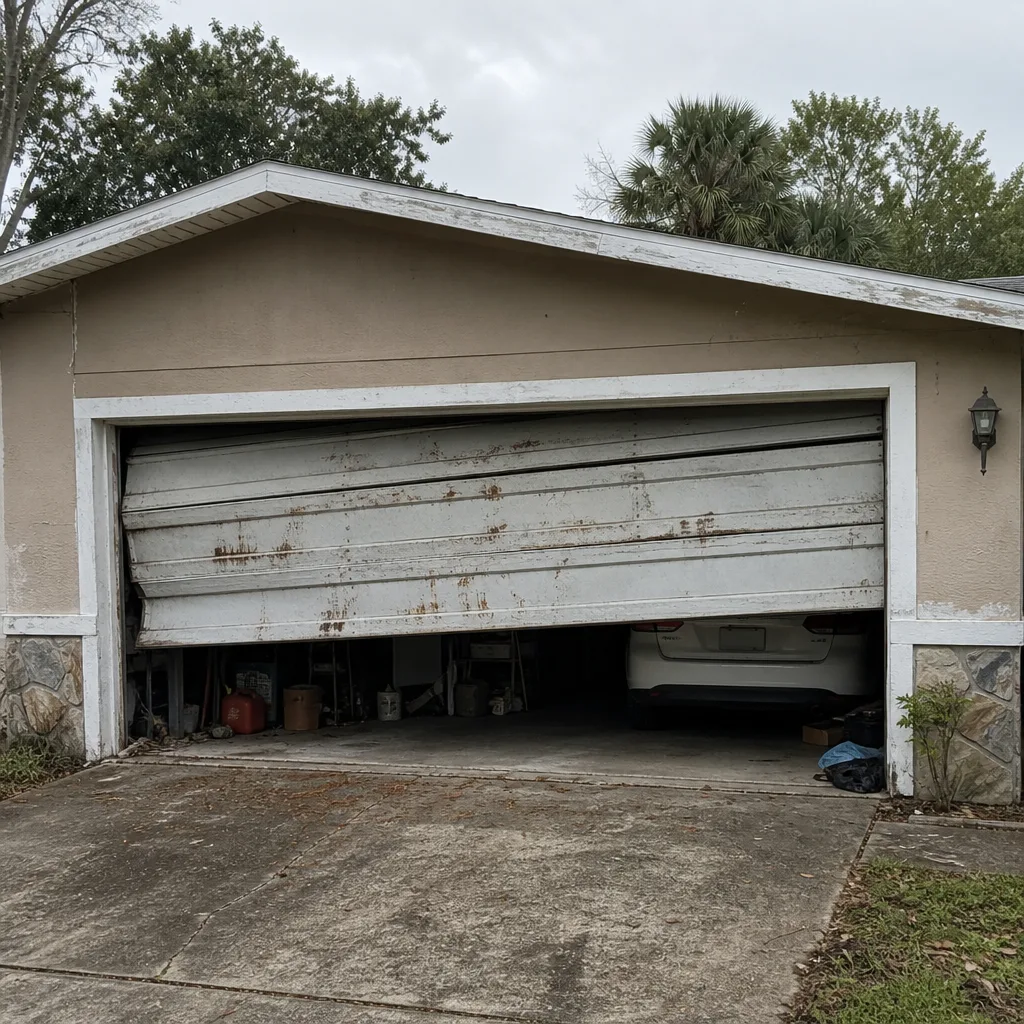 Before
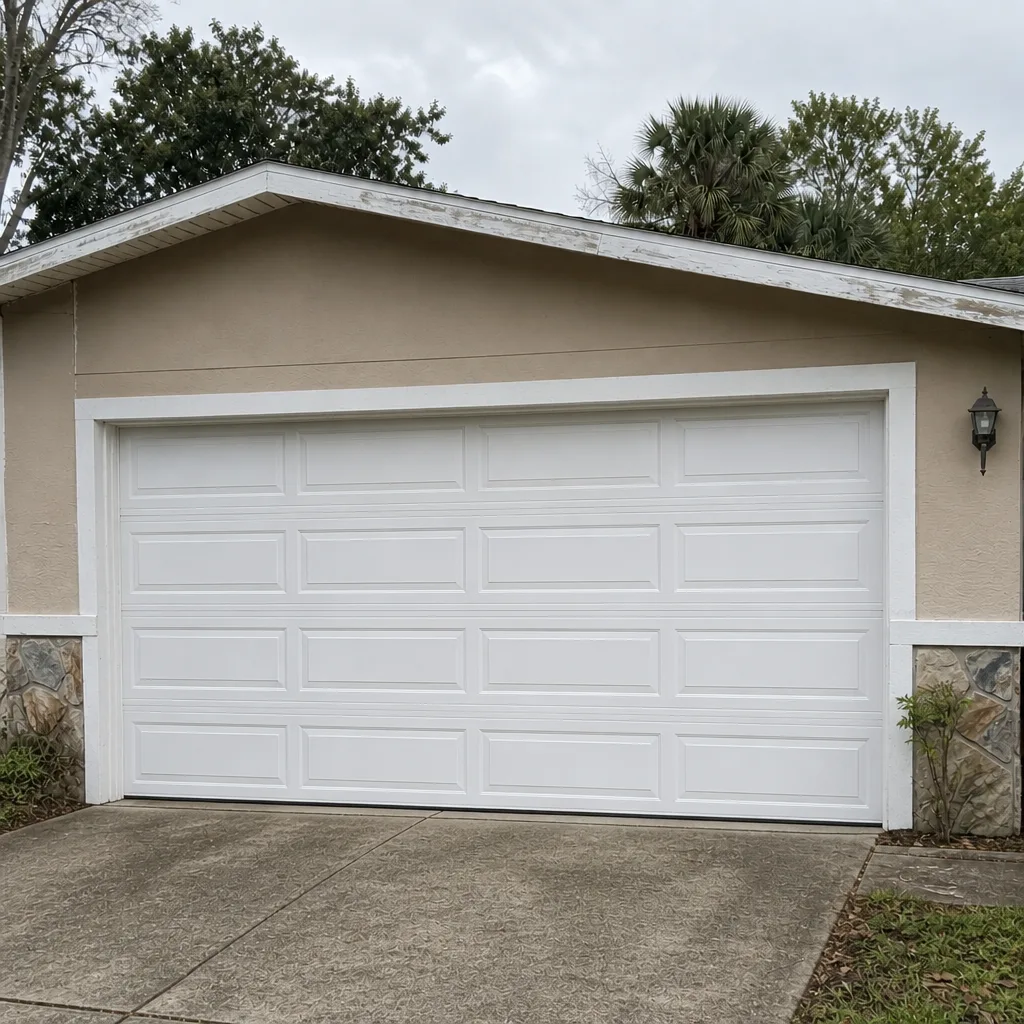 After
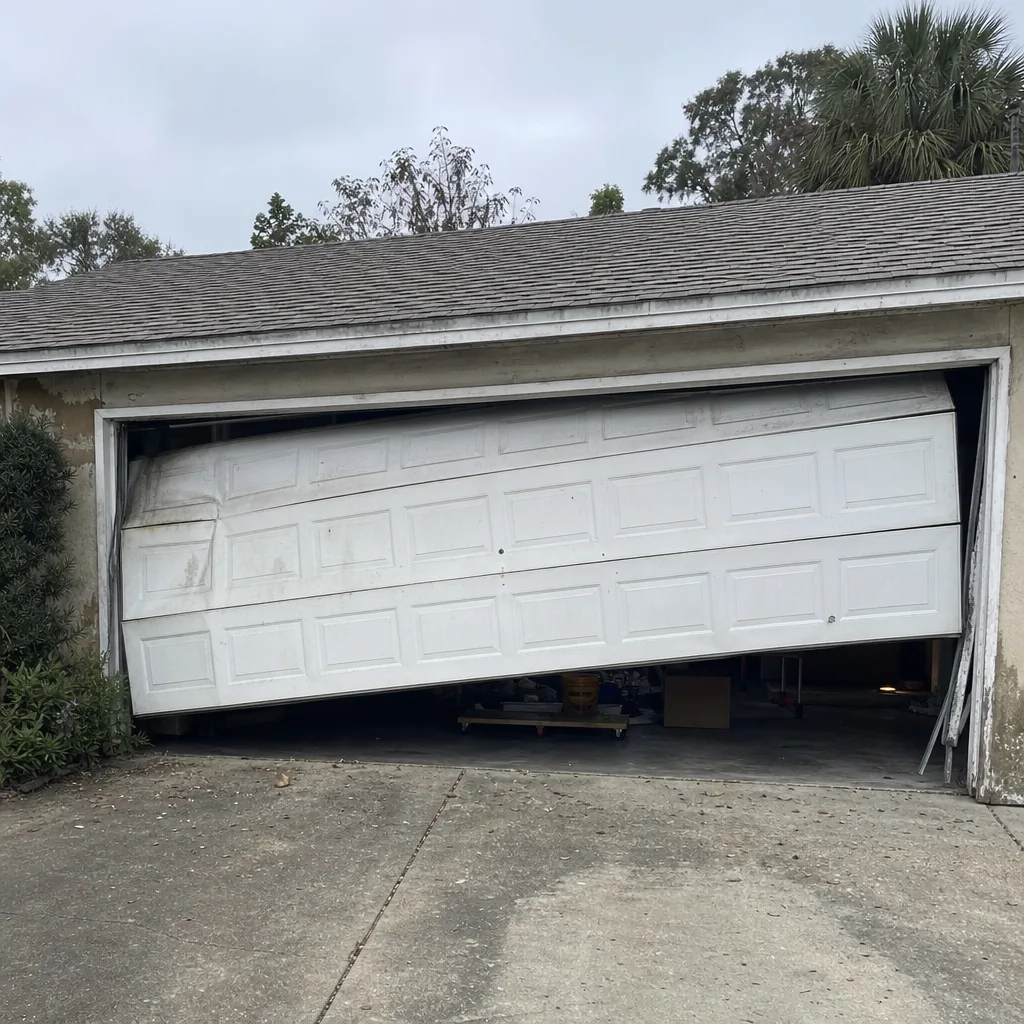 Before
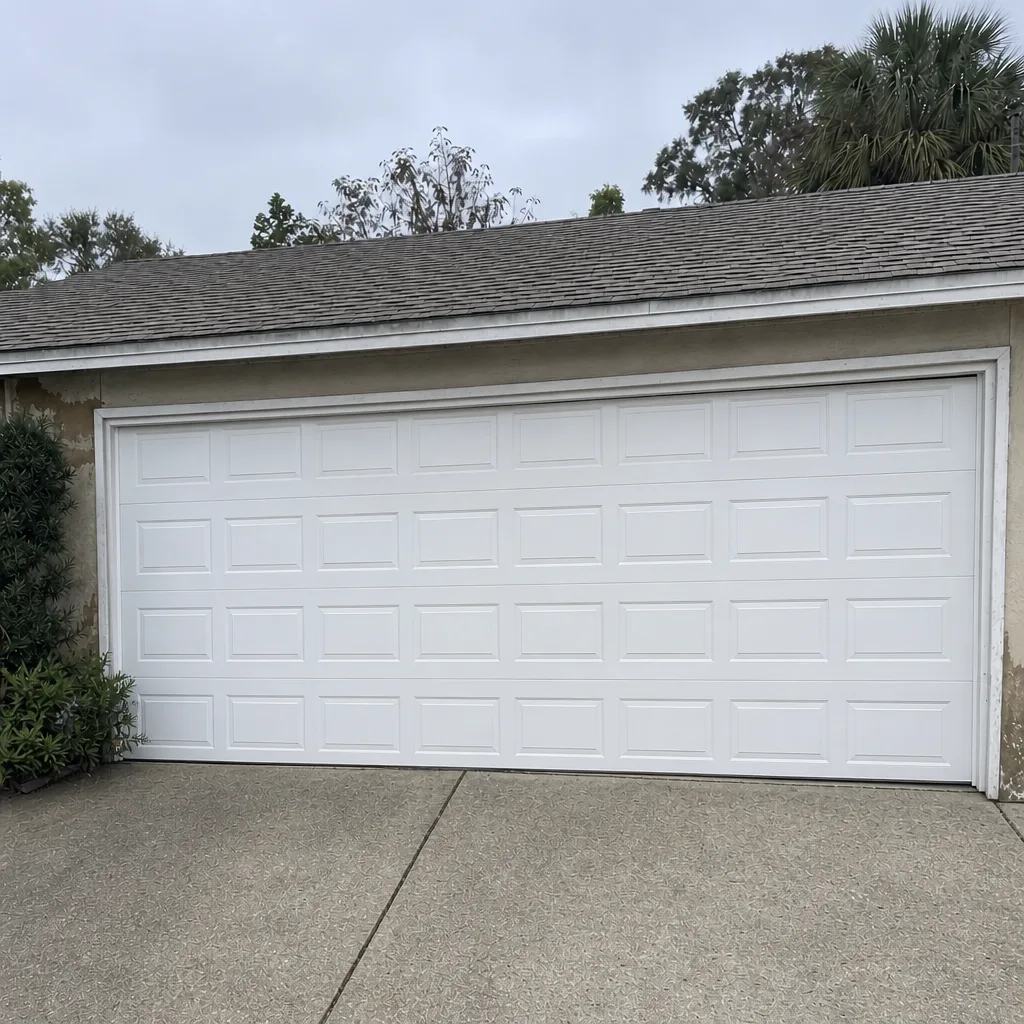 After
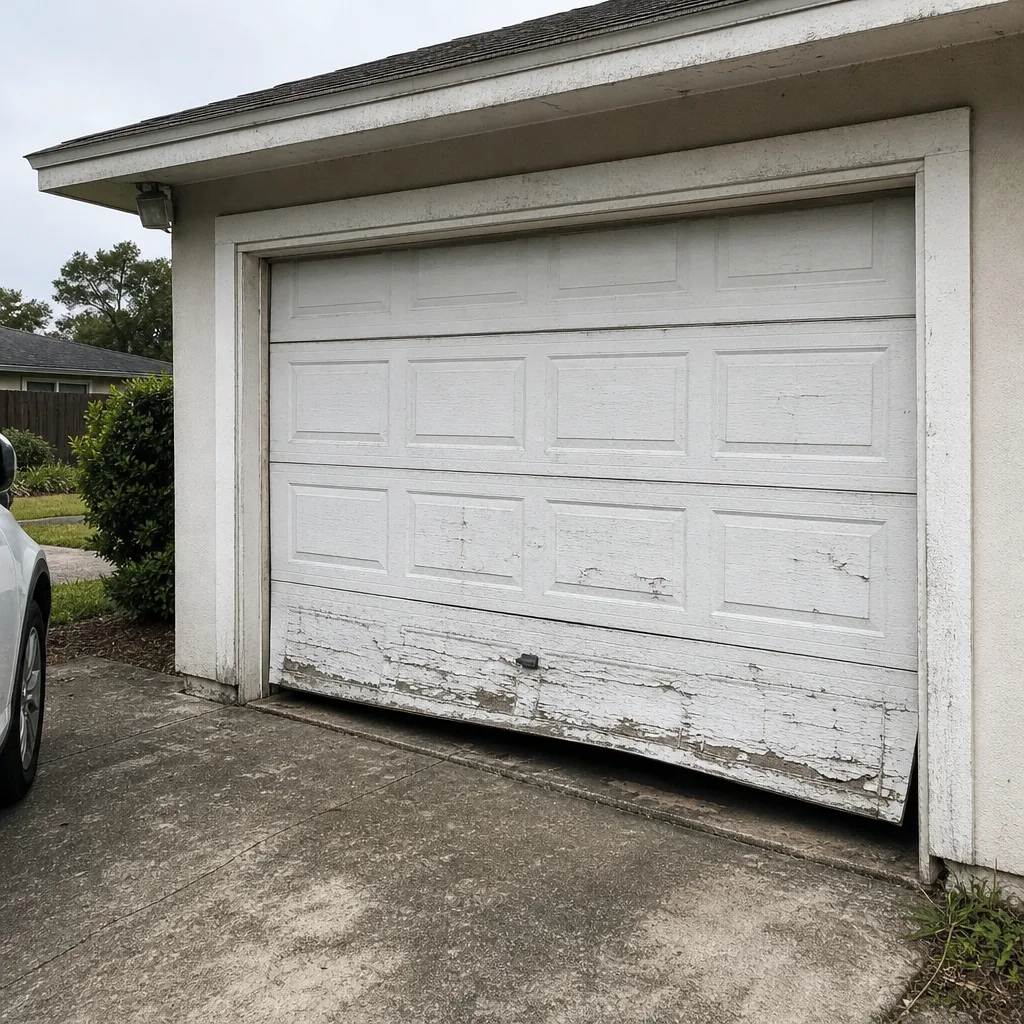 Before
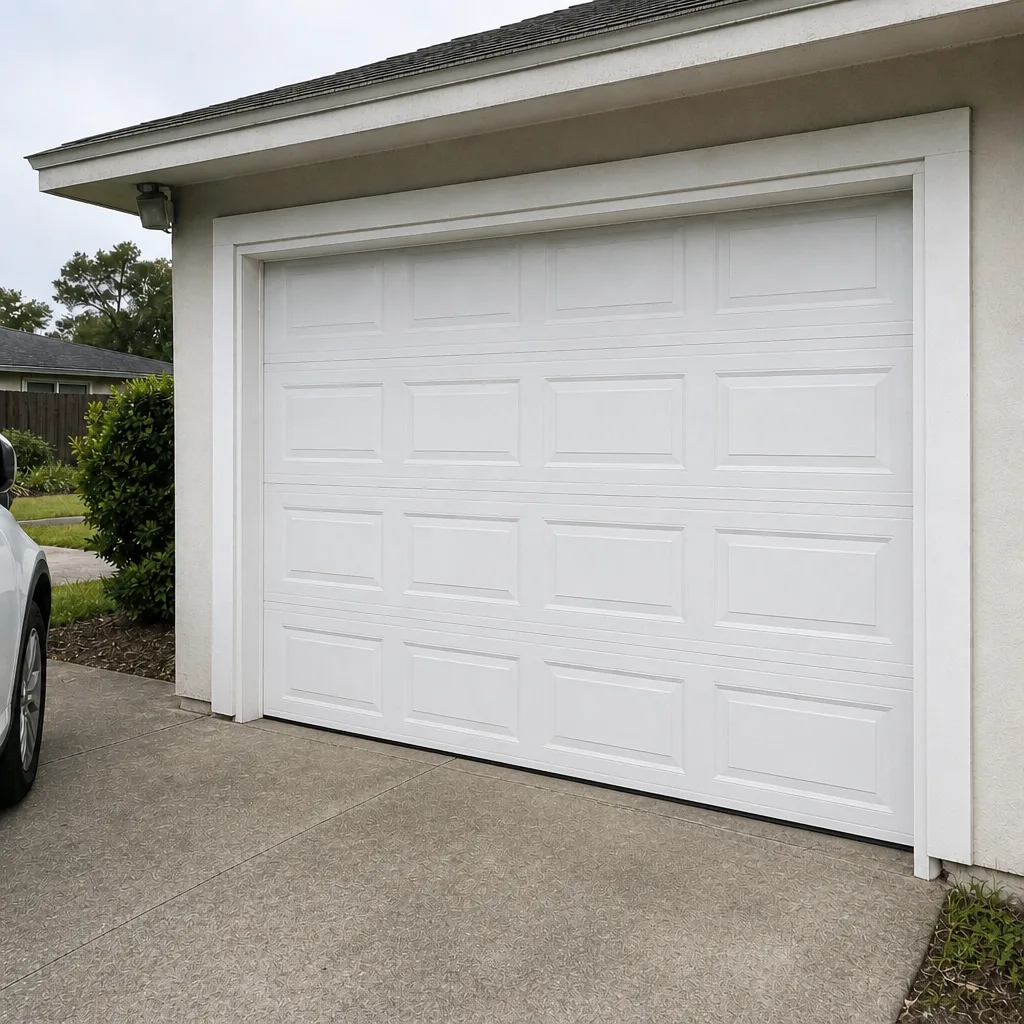 After
When to Call a Professional
Call a professional for anything involving a spring, a cable, a sagging door, a door that’s out of its tracks, or an opener that won’t move the door safely. These are the signs where a wrong diagnosis can cause a worse failure. Call sooner than later if it’s a torsion spring, a broken cable, or a door that reverses on its own. Visual checks, seal replacements, and remote battery swaps are fine for a homeowner. Everything else deserves a trained eye.
Port Orange Garage Door Repair Pros covers repair, opener repair, spring repair, and new-door installation, and we handle emergency situations. The estimate is free and the written price is set before any work starts. Call (877) 735-4535. We answer 24/7. Fast dispatch from 7am to 7pm, Sunday through Friday.
Frequently Asked Questions
The white oxidation film on the hardware is usually overlooked first. It looks like ordinary dust, but in Port Orange’s humidity it’s the earliest sign that the protective finish on a metal part has broken down. Wipe it away and see if it returns within a few weeks. If it does, get a check.
There’s no fixed number, and any site that gives you one is guessing. What we can say is that humidity speeds up corrosion, so a rusty spring in Port Orange has a shorter useful window than the same spring in a dry climate. If you see rust on the coil, have it inspected rather than waiting for a schedule.
No. Lubricate rollers and hinges if you want, but leave springs alone. Springs are under extreme tension, and lubricant can mask the visual signs a technician uses to judge wear. A trained professional handles spring checks and repairs.
Yes, and it’s often a fast diagnosis. A door that reverses is usually a sensor issue, a spring fatiguing, or a travel-limit problem. We check the safety system and the door’s balance together. Call (877) 735-4535 for an exact quote.
Yes. LiftMaster and Chamberlain are among the eight brands we work on, along with Genie, Clopay, Amarr, Wayne Dalton, Craftsman, and Raynor. Smart and Wi-Fi-enabled systems are something we see regularly, and we diagnose them the same way we do a legacy mechanical opener. Call (877) 735-4535 for a free estimate.
Not usually. A new squeak or a light rattle is a schedule-it-soon sign. A grinding noise, a single loud bang, or a door that feels suddenly heavier is the urgent version. If you hear any of those, stop using the door and call.
The written estimate is the price. We quote the job before any work starts, and the estimate is free. If we find a different problem once we’re there, we’ll explain it before doing anything else. Call (877) 735-4535 to get started.
For urgent failures like a snapped spring or a door off its tracks, we offer emergency service and can often get out the same day. Call (877) 735-4535. We answer 24/7. Fast dispatch from 7am to 7pm, Sunday through Friday.
The Bottom Line
Your garage door warns you before it fails. A little rust, a new sound, a bit of hesitation, a worn seal. In a dry climate, you might have months to act on those signs. In Port Orange, humidity compresses that timeline. Springs and cables corrode faster, seals soften faster, and parts that looked fine last season can be closer to the end than they seem.
The rule we’d leave you with: if it involves a spring, a cable, a door that won’t balance, or a door that reverses on its own, stop using it and call. If it’s a squeak, a light rust spot, or a worn seal, get it on the schedule. Either way, catch the sign while it’s a warning and not a repair. Port Orange Garage Door Repair Pros offers free estimates, and we’ll tell you what’s actually wrong and what’s actually needed. Call (877) 735-4535. We answer 24/7. Fast dispatch from 7am to 7pm, Sunday through Friday. For more on what we do, visit Port Orange Garage Door Repair Pros.
Written by the team at Port Orange Garage Door Repair Pros.