
Last updated November 21, 2026
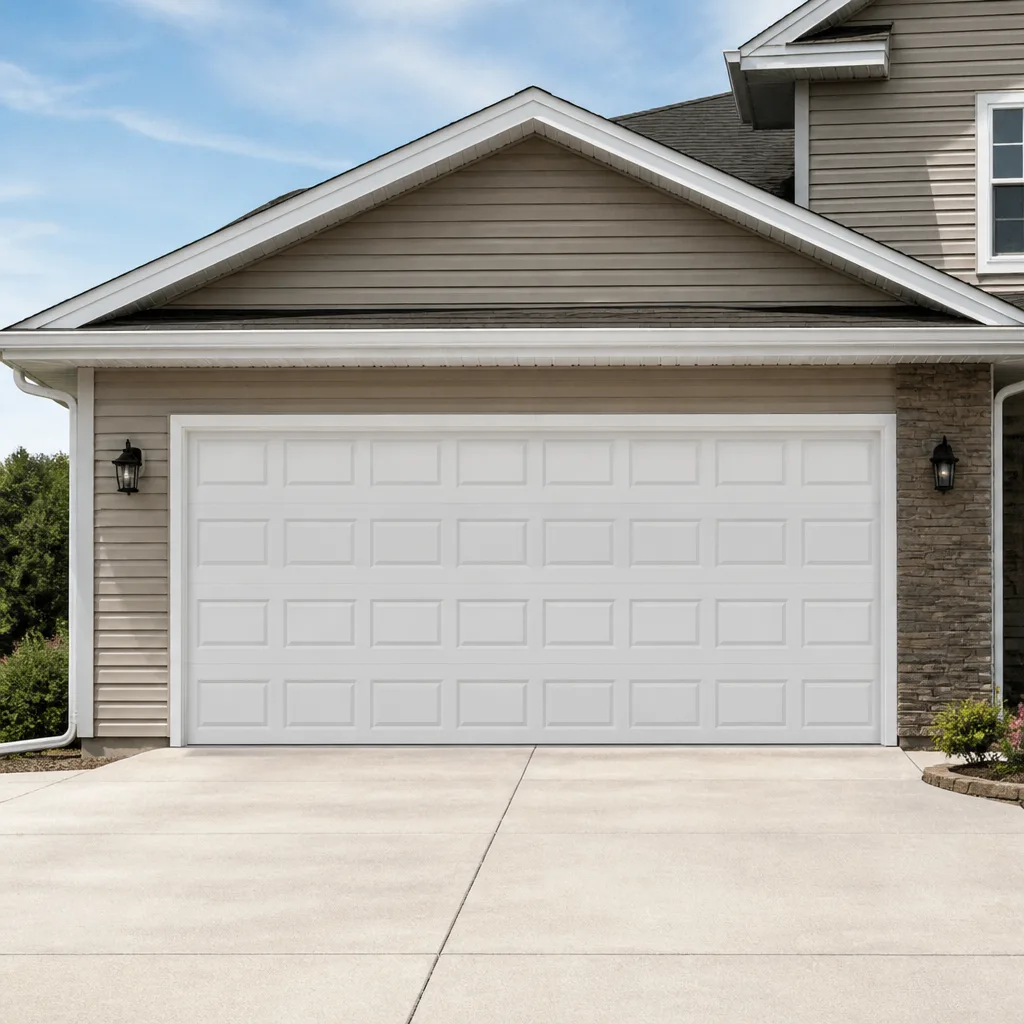 Raised-panel steel
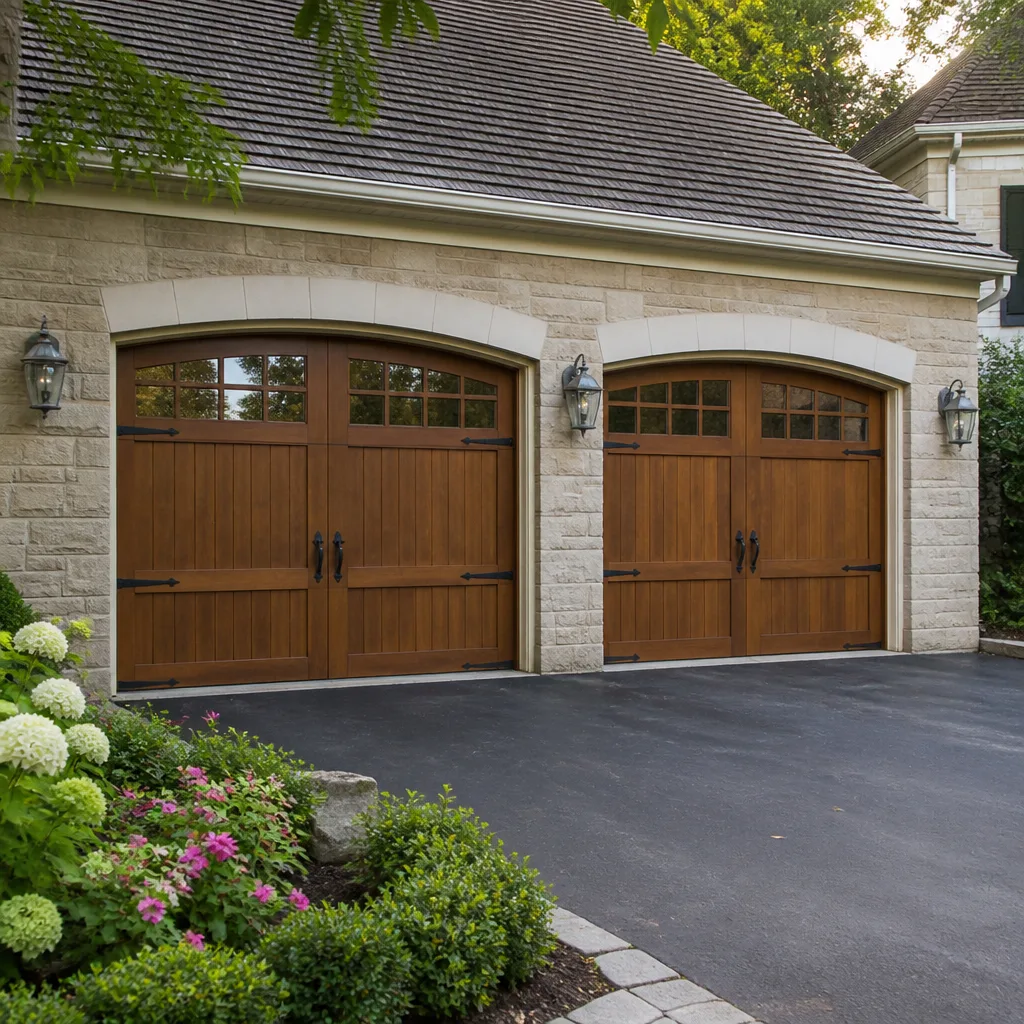 Carriage house
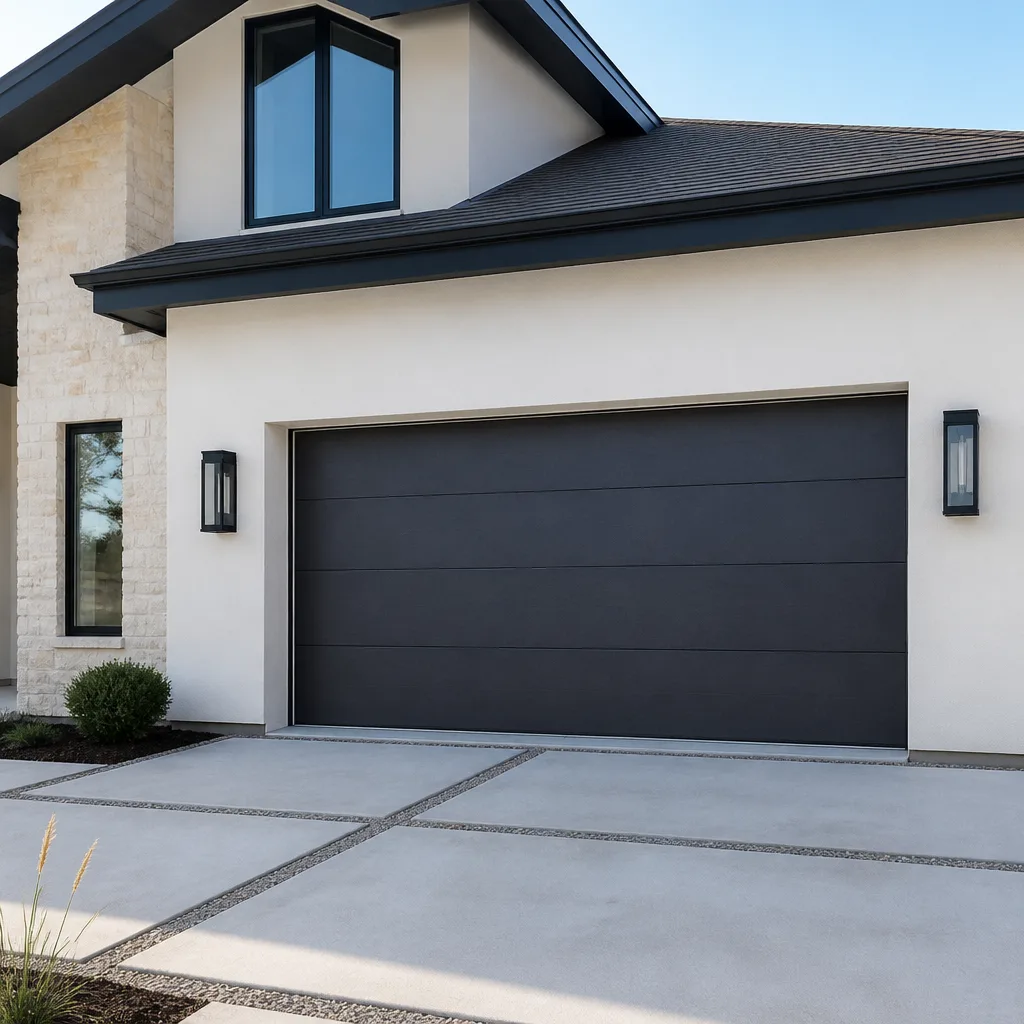 Modern flush
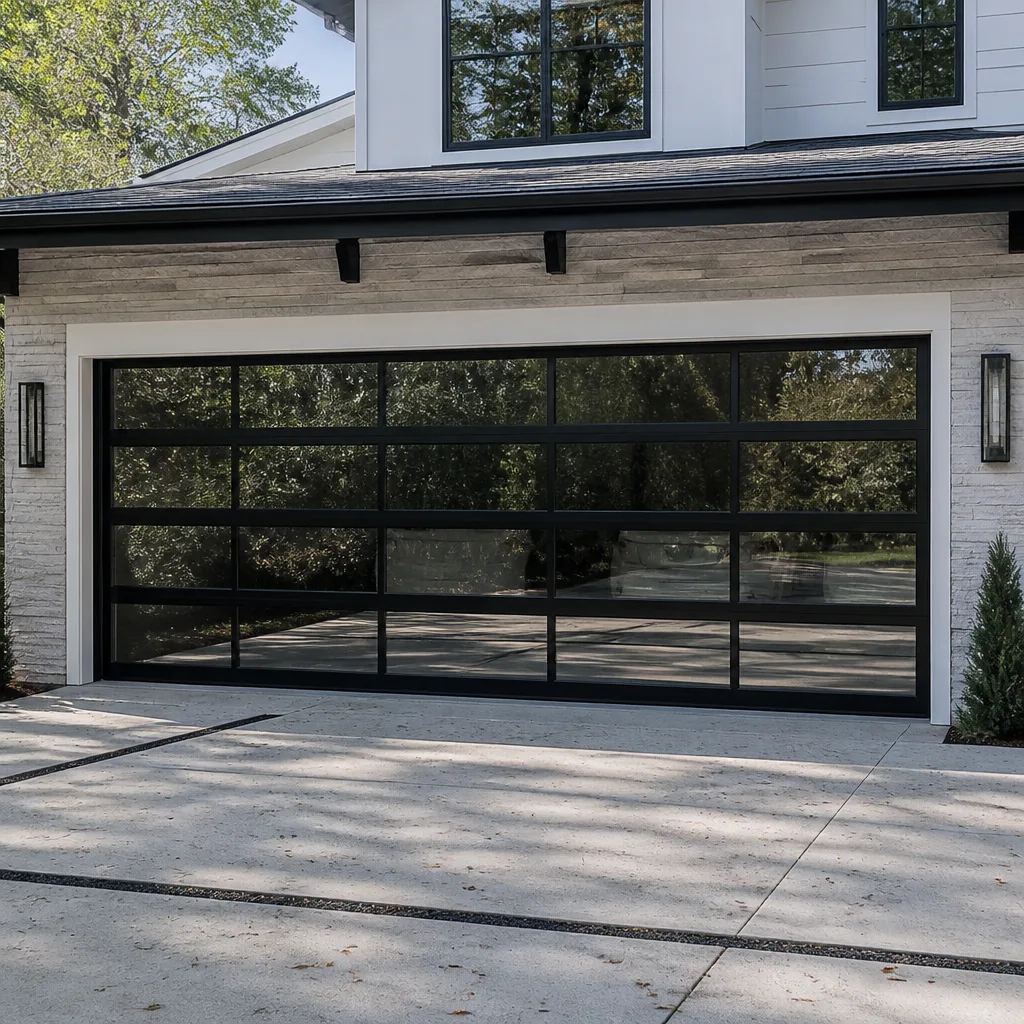 Full-view glass
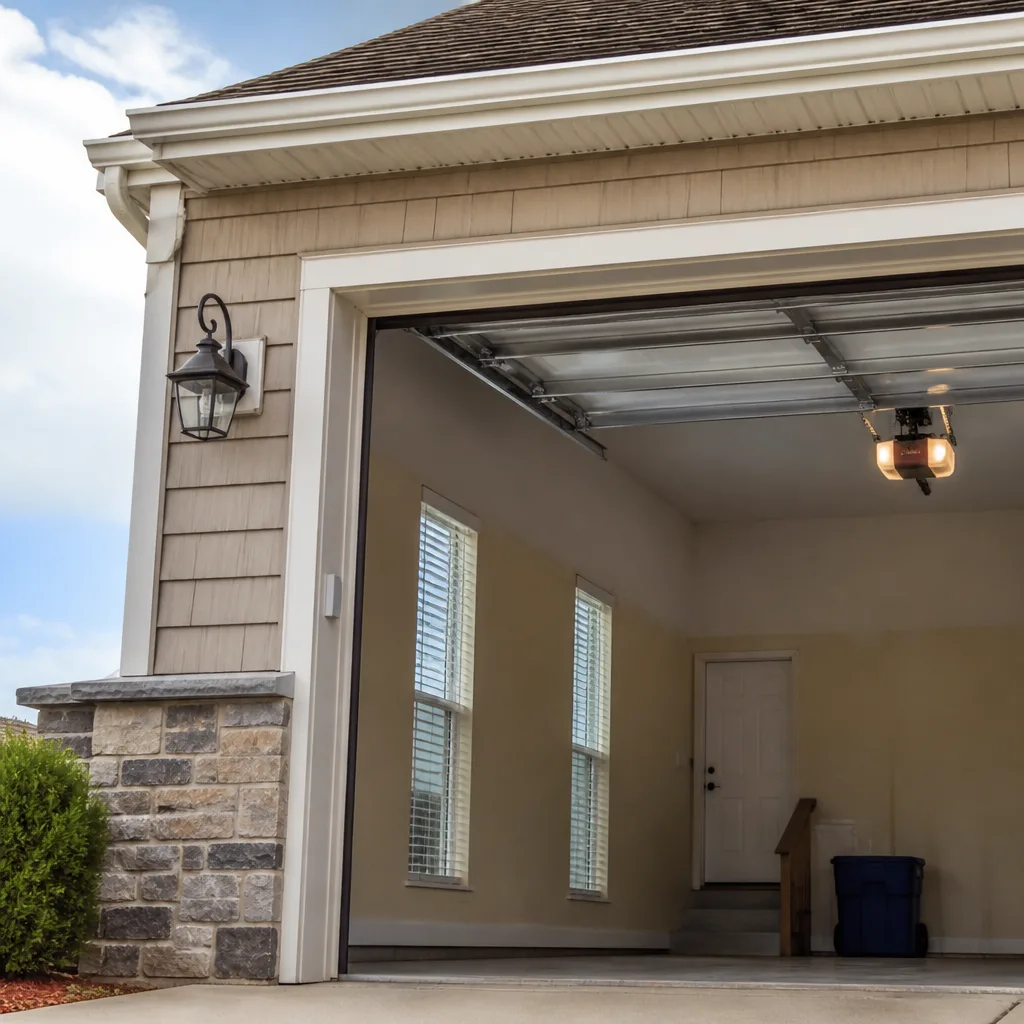 LiftMaster openers
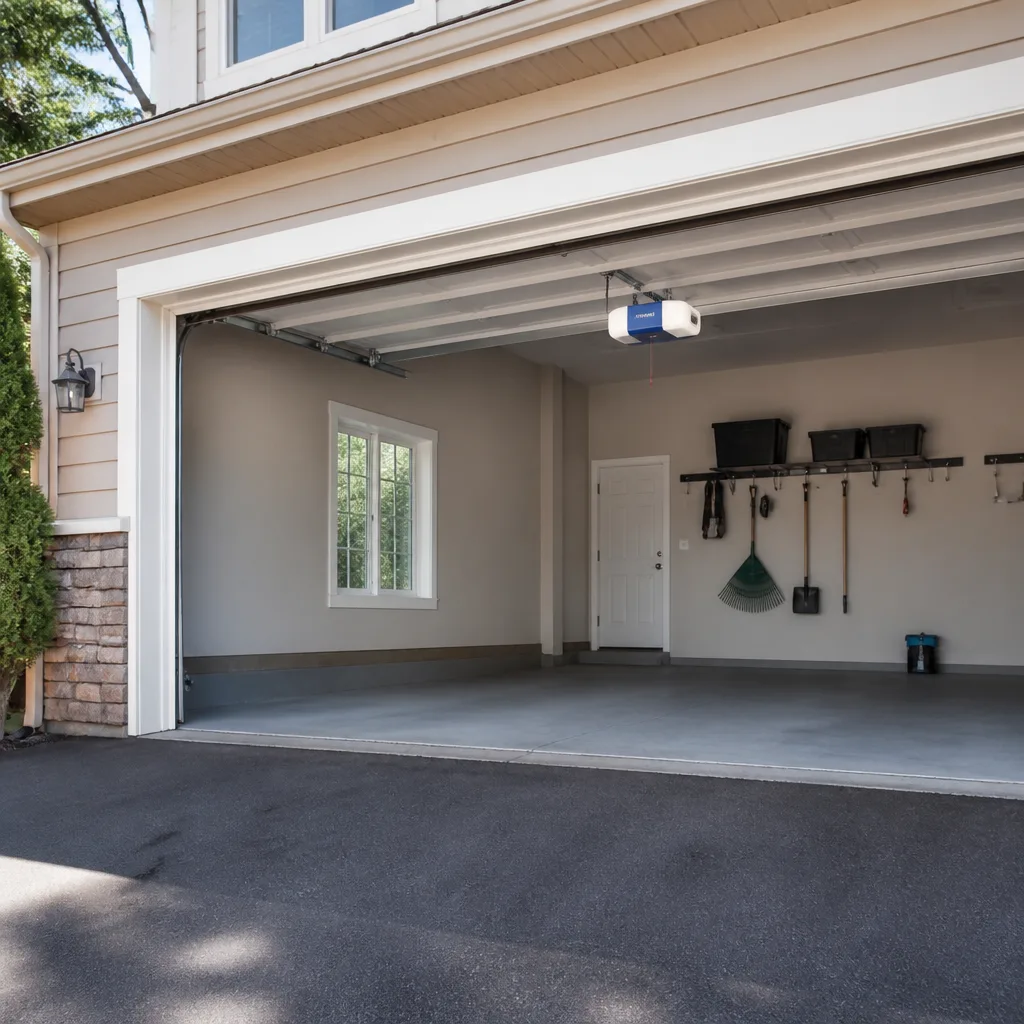 Chamberlain openers
Full 25-point door and opener safety check with every visit - springs, cables, rollers, tracks, and your LiftMaster or Chamberlain opener included
You get a price before we start. It does not change when the pro arrives.
Get your free estimateThe Complete Guide to Garage Doors in Port Orange
Most garage door advice online is written for places with snow, hard freezes, and dry air. Port Orange is none of those things. We sit about four miles from the Atlantic on Florida’s east coast, and the air here carries moisture and salt that quietly wears on the metal parts your door depends on most. Springs corrode, cables stiffen, and hinges that would last years inland start to grind sooner. Add hurricane season and Florida’s product approval rules, and a door here faces a very different set of demands than a door in Denver. This guide walks through how doors actually behave in Port Orange, which materials hold up, what the wind-rating rules mean, and how to tell repair from replacement.
Quick Answer
A garage door in Port Orange needs to handle humid, salty air, strong UV, and hurricane-season wind loads, which means rust-resistant hardware, a wind-rated door or bracing where required, and seasonal lubrication matter more here than in most of the country. Florida Product Approval rules govern which doors can be installed and where, and in Volusia County a standard door and a wind-load rated door are not the same product. Regular lubrication, watching for spring and cable corrosion, and repairing small issues before they grow keeps a door running longer in this climate.
Table of Contents
- How Port Orange’s Climate Affects Your Garage Door
- Which Door Materials Hold Up Best in Port Orange?
- Wind-Load Rating and Florida Product Approval, Explained
- Springs and Cables: The Parts This Climate Attacks First
- Choosing and Maintaining an Opener for a Florida Door
- Brands and Service in the Port Orange and Daytona Beach Area
- Repair or Replace? A Step-by-Step Way to Decide
- A Simple Maintenance Routine for Port Orange Doors
How Port Orange’s Climate Affects Your Garage Door
The single biggest difference between a garage door in Port Orange and one in an inland or northern city is moisture. Coastal Florida air holds salt and water vapor year-round, and both go to work on the steel in your door. The springs above your door are wound steel under constant tension, and when that steel corrodes, it weakens in ways you can’t see until it snaps. The same goes for the lift cables and the hinges. A door that lives four miles from the ocean sees this wear sooner than a door twenty miles inland, and it’s why the same components that last a long time in a dry climate can fail faster along the coast.
Heat and UV do their own damage. Port Orange summers are long and bright, and the sun hits a south- or west-facing door hard. Paint fades, wood dries and cracks, and plastic parts like rollers and hinges grow brittle. On a garage that holds heat, the door also takes repeated expansion and contraction through the day, which loosens fasteners over time.
Hurricane season runs through the warmer months here, and while most storms pass without a direct hit, the seasonal winds and rain are a real test. Doors that aren’t rated or braced for wind load can bend or come off their tracks in a strong event. Wind-rated doors, proper bracing, and a checked opener that actually holds the door are the practical defenses.
None of this means a door can’t last in Port Orange. It means the parts that fail first are predictable, and a homeowner who knows which ones to watch gets years more out of the whole system.
Which Door Materials Hold Up Best in Port Orange?
The three common door materials are steel, aluminum, and fiberglass/composite, and each behaves differently in coastal Florida humidity and sun. Steel is the most popular and, when it’s galvanized and painted well, holds up fine; the weak point is any spot where the finish gets nicked, because bare steel rusts quickly in salty air. Aluminum resists rust better and is lighter, but it dents and can dent from a bump, and its paint has to be kept intact. Fiberglass and composite doors won’t rust at all and resist moisture well, though lower-grade versions can fade or chalk under strong UV.
Here’s how the three compare in practical terms for a Port Orange home:
- Steel: Durable and cost-effective. Look for a galvanized base and a factory finish, then keep the paint touched up. Repairable, widely available, and easy to find parts for.
- Aluminum: Naturally rust-resistant and good where moisture is the worry. Lighter and quieter, but less dent-resistant than steel. Best when the finish stays intact.
- Fiberglass and composite: Immune to rust and moisture and stable in humidity. Higher-quality panels resist fading better. Good choice for a home that wants a wood look without the maintenance.
For most Port Orange homes, a well-finished steel door with regular upkeep does the job, especially if it’s a wind-rated model where the code calls for one. Aluminum and fiberglass make sense when rust and moisture are the top concern or when weight matters. Whatever you choose, the finish is your first line of defense against the salt-laden air, so a door that stays painted and intact lasts longer than one left bare.
Wind-Load Rating and Florida Product Approval, Explained
Florida has some of the strictest building rules in the country for anything that can catch wind, and a garage door counts. The key concept is Florida Product Approval: the state maintains a system of approved products, and a garage door installed in a regulated area typically needs to be a product that’s been tested and approved for the wind pressures of its location. A standard, unrated door and a wind-load rated door are not interchangeable here, and in Volusia County the difference matters.
Wind-load rating refers to the pressure a door is engineered to withstand in a given wind event. A door might be rated for one pressure range and reinforced for a specific opening size, and a door that isn’t rated for the wind where you live is simply a different product from one that is. This is why buying a door on looks alone, or ordering the cheapest option online, can create a problem before the door is even hung.
If you’re replacing a door, here’s a reasonable order of steps:
- Check with your city’s building department on what your area requires for a garage door, including any product approval and wind-rating rules for your address.
- Choose a door that carries the approval needed for that requirement, not just the look you like.
- Confirm the door’s reinforcement matches your opening width and height, since bracing is sized to the door.
- Keep the product approval paperwork; it can matter for inspections and for resale.
We work on doors across this market and see the results of both approaches. Buying a properly rated door up front costs less than discovering later that a door doesn’t meet the requirement and has to come back down.
Springs and Cables: The Parts This Climate Attacks First
If there’s one part of your door this climate works against hardest, it’s the springs. Torsion springs sit above the door under heavy tension and lift the door’s weight; extension springs stretch along the sides. Both are steel, and steel under constant tension in salty, humid air corrodes and weakens. A spring that looks fine on the outside may be compromised where you can’t see, and when it fails it does so suddenly and loudly. This is genuinely dangerous work, and we say that plainly. A broken spring can whip, and the cable and drum under it are also under load. Spring repair is one of the most safety-critical jobs in this trade, and it’s not a project for a homeowner with a ladder and a pair of winding bars. Our garage door spring repair specialty exists because we’ve handled enough of these in coastal Florida to know exactly what a corroded spring looks like before it pops.
Cables run to the same story. A lift cable is braided steel wire that runs through a drum at each end, and corrosion weakens it. A cable that frays or kinks is an immediate safety concern, and you’ll sometimes see the door hang crooked or hear a bang as the cable lets go. Hinges and rollers are the smaller, slower failures: hinges seize, rollers wear flat, and the door starts to groan or bind.
In our experience the earliest signs are easy to catch:
- A door that suddenly gets heavier to open or that won’t stay up on its own.
- A loud snap from the garage, often followed by a door that won’t move.
- Visible rust or buildup on the spring coils or the cables.
- A gap, kink, or fray in a cable, or a door hanging crooked.
If you see any of those, stop using the door and get it looked at. Springs and cables are the parts where professional help is non-negotiable, both for your safety and because a properly matched spring is what keeps the rest of the system from wearing out faster. Keep the moving metal parts lubricated, and the springs and cables will last noticeably longer even in this air.
Choosing and Maintaining an Opener for a Florida Door
An opener does one job: it lifts a door that’s already been counterbalanced by the springs. When a door is adjusted correctly and the springs are sound, almost any quality opener will do the work. When a door is binding or a spring is weak, the opener works harder than it should and eventually fails, which is why opener repair and door repair often overlap. We work on LiftMaster and Chamberlain openers most, including the Wi-Fi and smart-home models that tie into a phone, and we also see Genie and Craftsman units throughout the area.
For a Port Orange home, a few maintenance habits matter more than the brand:
- Lubricate the moving parts: springs, hinges, rollers, and the opener’s rail. A garage-door lubricant, not grease, is the right choice in this humidity.
- Test the safety reverse: a door should reverse when it meets an obstruction. It’s a quick check and a genuinely important one.
- Check the balance: disconnect the opener and lift the door by hand. A well-balanced door lifts easily and stays put.
- Watch the wall controls and remotes: a finicky button is often a wiring or logic-board issue, not a reason for a whole new opener.
Repair before replace is usually the right call on openers. A motor that runs but doesn’t lift often has a stripped gear or a bad capacitor, both repairable. A remote that stopped working might just need re-pairing. When a unit is genuinely at the end of its life, replacing it with one matched to the door’s weight keeps the system working together. If your opener is acting up, our garage door opener repair covers the leading brands, and we’ll tell you honestly whether a repair is the answer.
Brands and Service in the Port Orange and Daytona Beach Area
The Port Orange and Daytona Beach area has a real mix of homes, and the doors reflect it. You’ll find Clopay and Amarr steel doors on newer builds, Wayne Dalton doors on plenty of older homes, and Craftsman openers still running in garages where the previous homeowner had them installed. When something fails, the practical question is whether the company you call has seen your brand before. Brand-specific quirks are real: how a particular door’s track brackets mount, how a specific opener’s safety sensors align, which parts are easy to get and which take a special order.
We service eight major brands, among them LiftMaster, Chamberlain, Genie, Clopay, Amarr, Wayne Dalton, Craftsman, and Raynor. That matters in a market like this one because it means you aren’t hunting for a different company for each part of your system. The same help that adjusts a Clopay door can diagnose the LiftMaster opener that lifts it, because they’re part of one system.
The other local reality is that coastal weather puts parts replacement on a schedule. We see the same components failing in the same order across Port Orange because they’re all exposed to the same humid, salty air. If you’re planning a replacement, it helps to know which brands and models are available in this area and which parts are stocked locally versus ordered. A door that needs a part nobody has in the region means a wait, and knowing that up front avoids surprises.
For a full picture of what we do, our garage door repair covers the everyday work. Port Orange Garage Door Repair Pros works on your brand, so you’re not starting over with every call.
Repair or Replace? A Step-by-Step Way to Decide
Plenty of doors get replaced that only needed a repair, and plenty get patched that should have been replaced. The decision comes down to a few specific factors, and in Port Orange the climate and code add weight to some of them. Age is one signal, but it isn’t the whole story: a well-kept door here can outlast a poorly kept one by years.
Work through these steps:
- Identify what’s actually broken. A snapped spring, a frayed cable, or a worn opener is a repair, not a replacement. Unless the door’s panels or structure are damaged, the problem is usually in the hardware.
- Weigh the cost of the fix against the door’s condition. A single repair on an otherwise sound door almost always makes sense. Several failing parts on a door with rotted panels or bent tracks starts to point the other way.
- Check whether the door meets current requirements. If your area requires a wind-rated door and yours isn’t one, a replacement is the honest answer.
- Look at the panels and structure. Dents, delamination, rust-through, and bent tracks can’t be repaired economically on many doors, and moisture damage to wood is a red flag.
- Consider energy and comfort. A newer insulated door holds up better to Florida heat and keeps the garage cooler, which matters if the space gets used.
We’re honest about that call. If a spring replacement gets you another several years, we’ll say so. If a door is beyond a worthwhile repair, we’ll explain why and walk through the replacement options, including the wind-rating requirements for your address. For a full replacement, you’re best served by a free measure and a written price rather than a same-day decision.
A Simple Maintenance Routine for Port Orange Doors
A little upkeep goes further here than in most places because the climate taxes the moving metal. You don’t need special tools to do the safe parts yourself, and doing them keeps a door running longer and tells you early when something needs a professional.
Each month, take a look and a listen:
- Open and close the door and listen for grinding, scraping, or a loud pop.
- Check the rollers, hinges, and springs for rust or buildup.
- Test the safety reverse by placing an object in the door’s path.
- Look at the cables for fraying or a crooked door.
Twice a year, do a bit more:
- Lubricate the springs, hinges, rollers, and opener rail with a garage-door lubricant.
- Check the balance: disconnect the opener, lift the door by hand, and confirm it stays put when partly open.
- Wipe down the door’s finish and touch up any nicks or scratches before they rust. This is the single best defense against coastal corrosion on a steel door.
- Check that the door’s weather seal at the bottom is intact and flexible.
Leave the springs, cables, and track alignment to trained help. Those are the parts that can hurt you, and the parts this climate stresses most. Keeping the finish intact and the moving parts lubricated is the routine that pays off.
Styles & brands we work with
- Raised-panel steel
- Carriage house
- Modern flush
- Full-view glass
- LiftMaster openers
- Chamberlain openers
Common Mistakes to Avoid
- Ignoring the finish. A small nick in a steel door’s paint is where rust starts in coastal air. Touch-ups are cheap; a rusted-through panel is not.
- Buying a door on looks alone. In Volusia County, a door that isn’t properly rated for your area can fail inspection or come down in a storm. Check the requirements first.
- Treating spring repair as a DIY job. The springs are under heavy tension and can cause serious injury. This is the one repair to leave to a trained professional every time.
- Skipping lubrication because it’s humid. It’s the opposite: moving metal in this air needs regular lubrication more, not less.
- Replacing an opener when the door is the problem. A new opener on a binding door won’t last. Diagnose the door first.
- Waiting on a loud pop. A snapped spring is the loudest sign, but a door that suddenly feels heavy is the earlier warning. Don’t ignore it.
- Assuming a cheap door online meets local rules. Product approval and wind rating aren’t options to guess at; confirm them with your building department and your installer.
See the difference
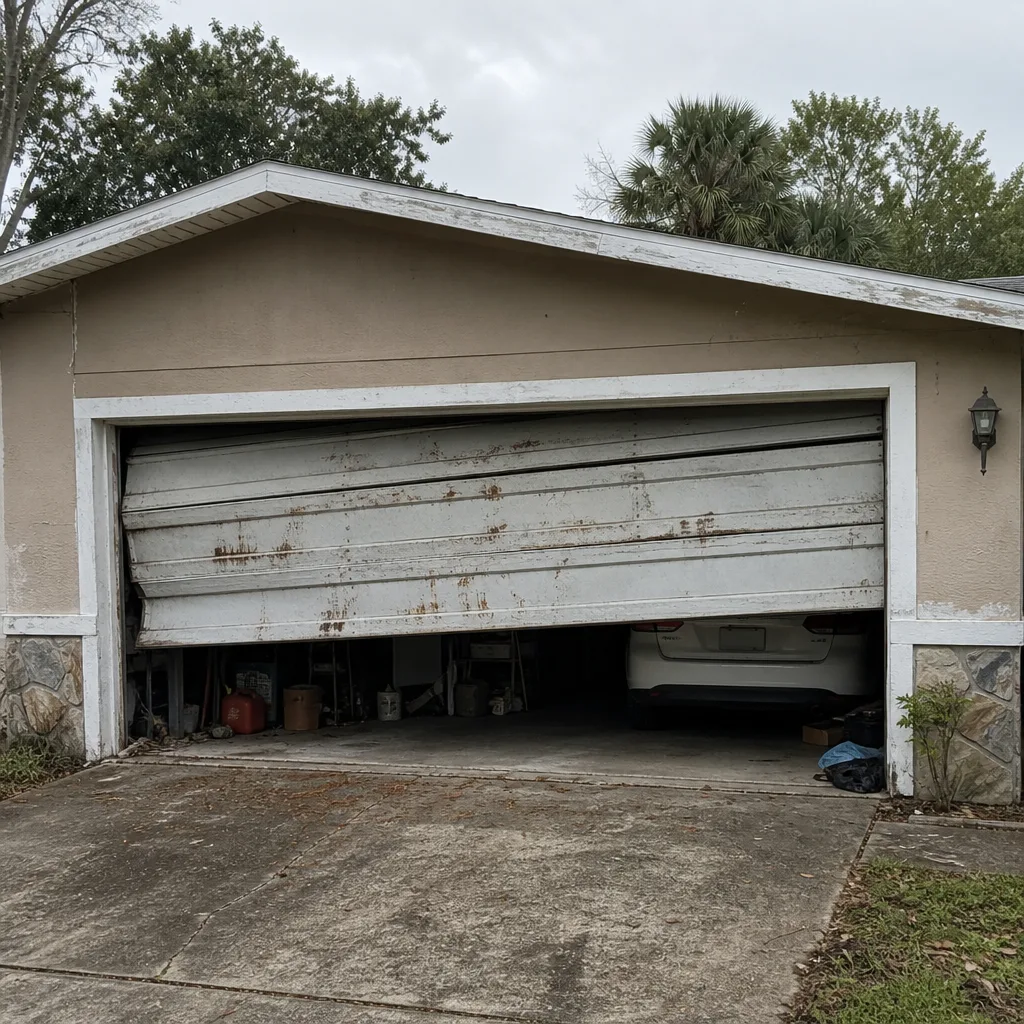 Before
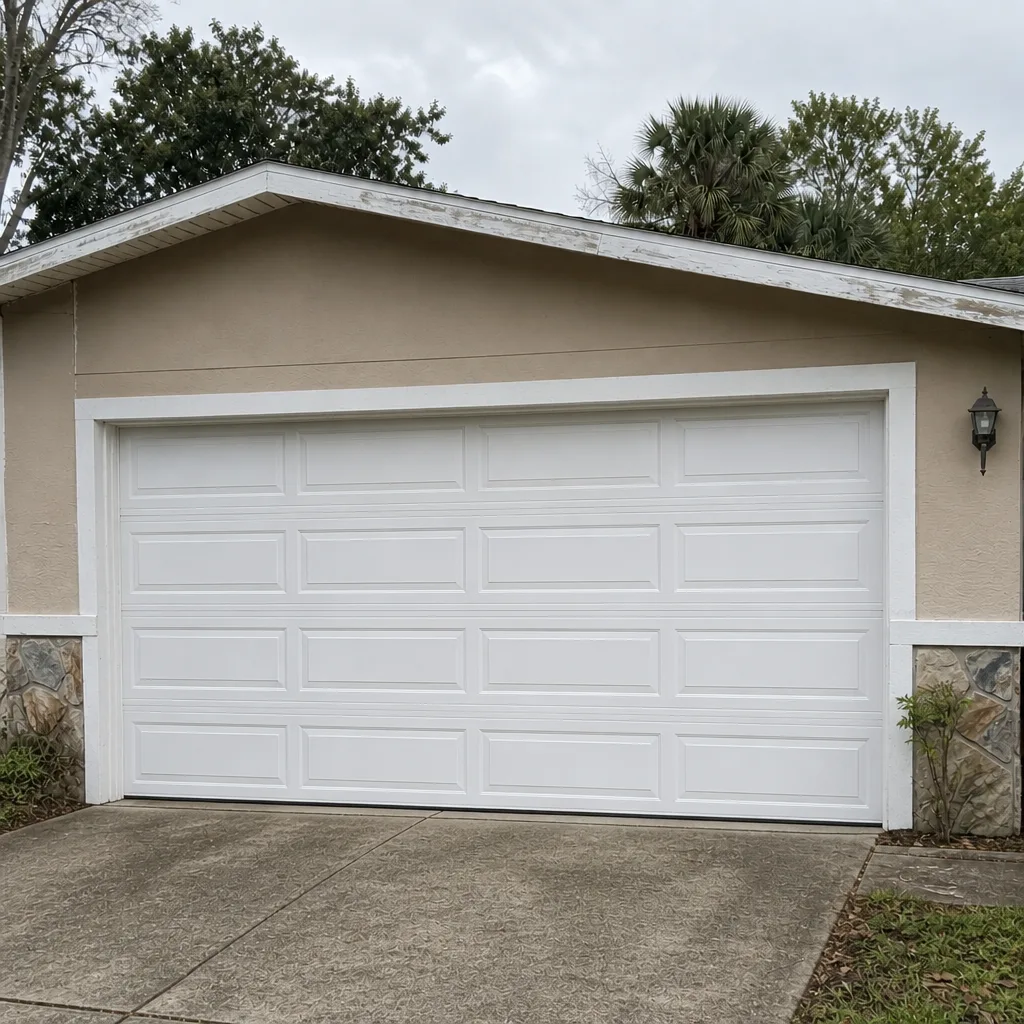 After
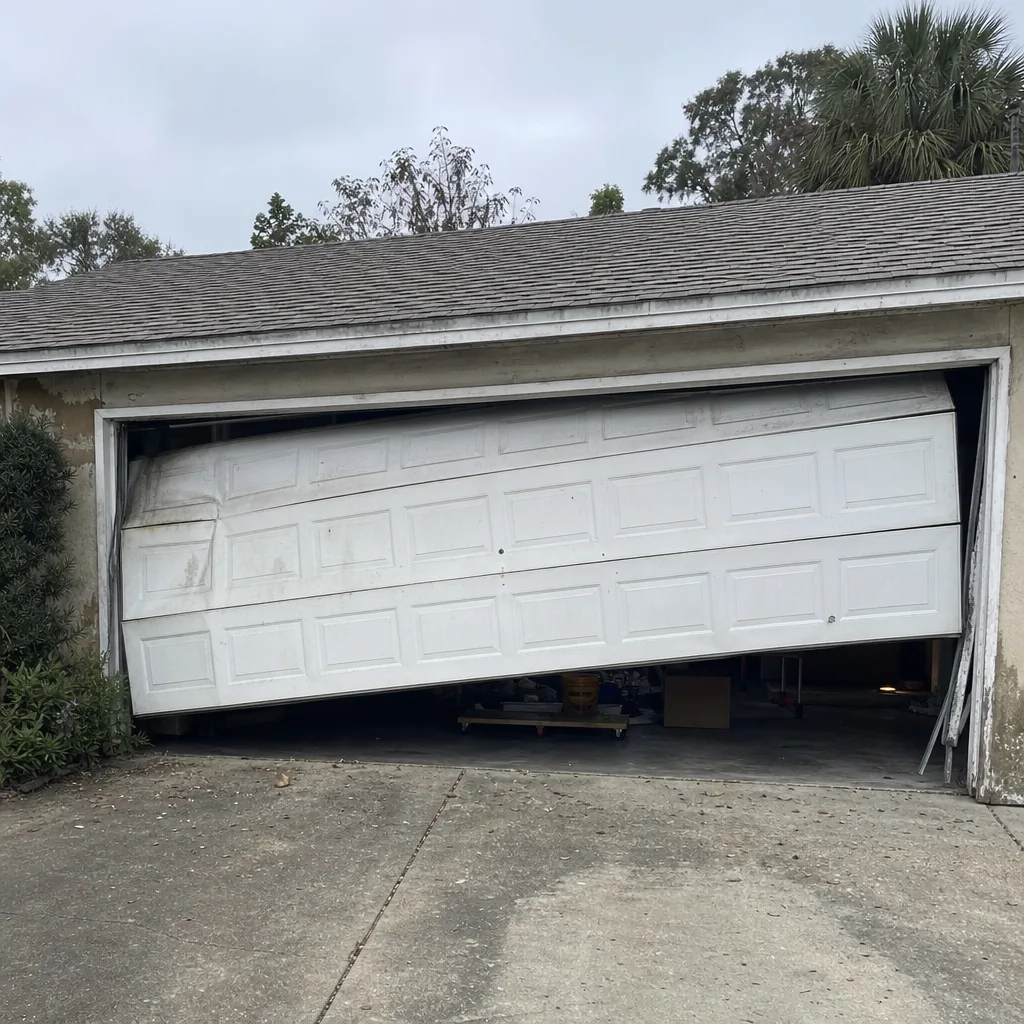 Before
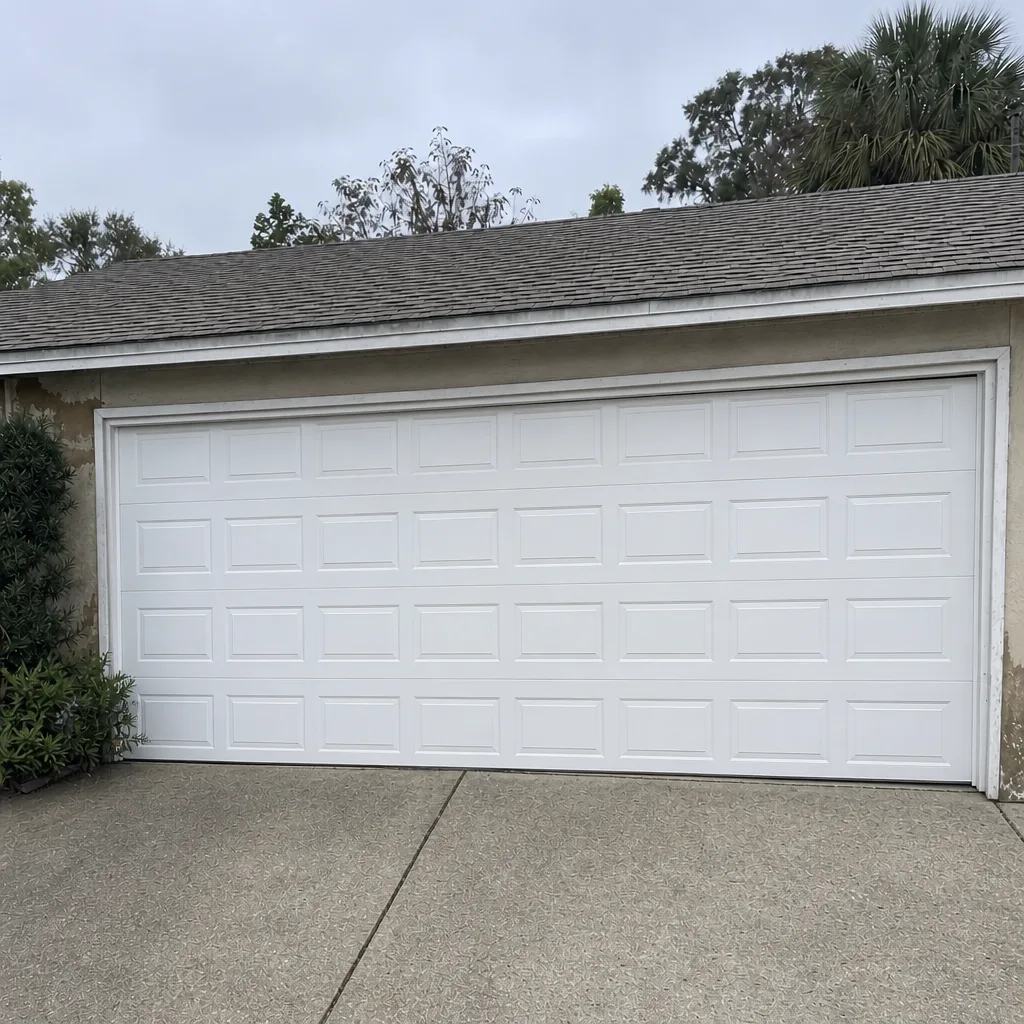 After
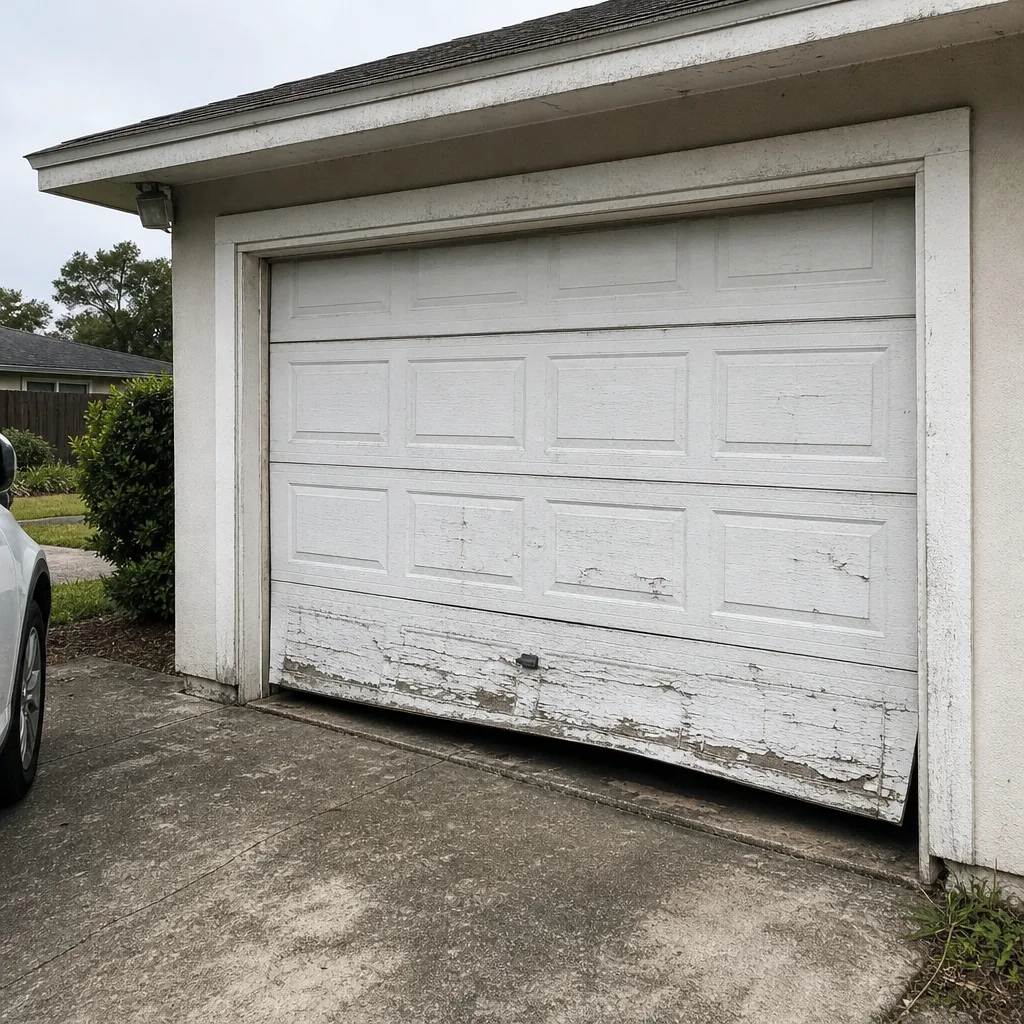 Before
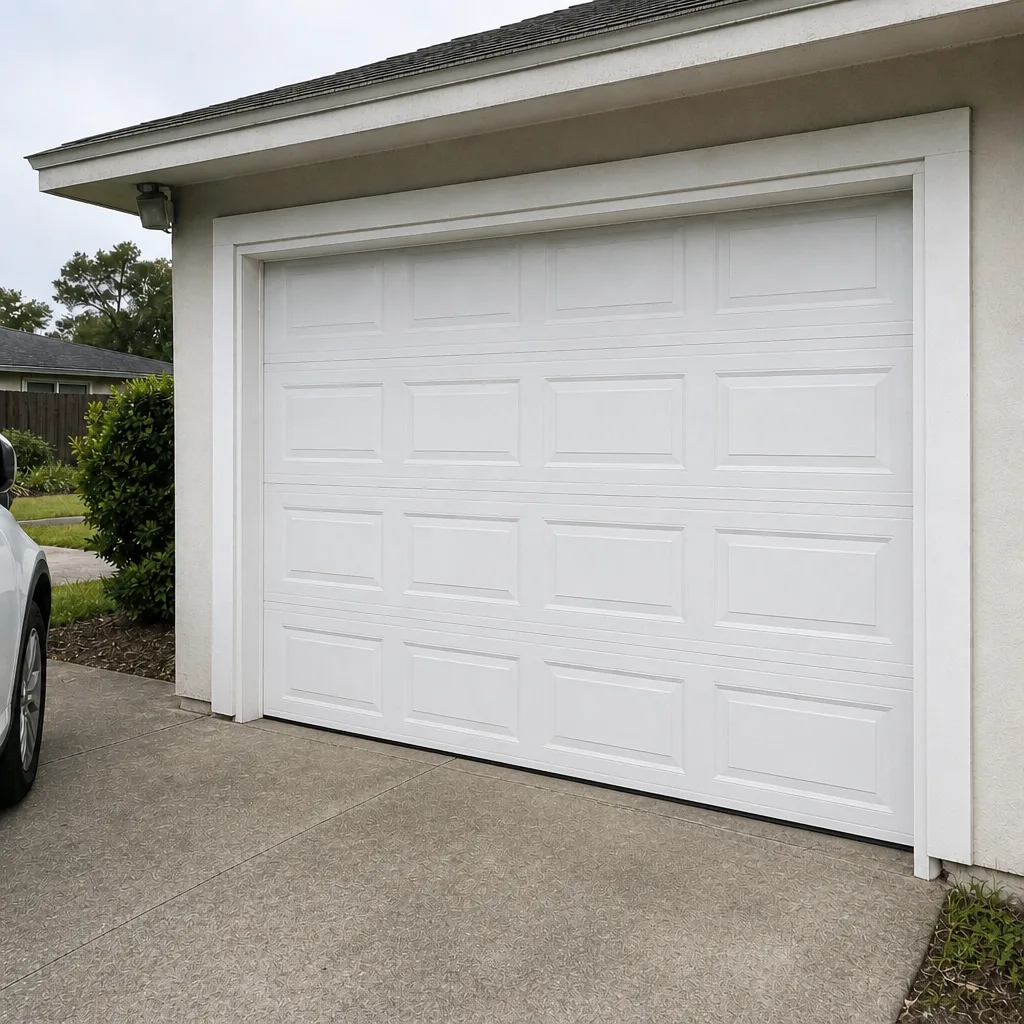 After
When to Call a Professional
Some jobs are safe to handle yourself and some aren’t, and the line is usually clear. Call a professional if a spring has snapped or looks corroded, if a cable is frayed or the door hangs crooked, if the door won’t open or close at all, or if the opener runs but the door doesn’t move. Call if you’re replacing a door and need to know what your property requires for wind rating and product approval, or if the door is damaged enough that repair versus replacement is a real question. Those are the moments where the wrong move can cost more, or hurt someone. Port Orange Garage Door Repair Pros offers free estimates in Port Orange, and we answer 24/7 with fast dispatch from 7am to 7pm, Sunday through Friday. Call (877) 735-4535.
Frequently Asked Questions
Springs here tend to fail sooner than in dry climates because the salty, humid air corrodes the steel while it’s under constant tension. There’s no fixed timeline, but yearly lubrication and watching for rust on the coils helps you catch wear early. If a spring has snapped or looks compromised, call us before using the door. Call (877) 735-4535 for a free estimate.
That depends on your address and your building department’s requirements, so check with the city before you buy. A wind-rated door is engineered for a specific wind pressure and is often required where the code says so. Ask your building department what applies to your property, then bring that to your installer.
A well-finished steel door is the practical choice for most Port Orange homes, and aluminum or fiberglass makes sense when rust and moisture are the top concern. Whichever you choose, keeping the finish intact is what protects it from the salt in the air. Our Port Orange Garage Door Repair Pros team can help you weigh the options for your home.
Most openers can be repaired, and that’s usually the first thing to check before replacing one. LiftMaster and Chamberlain units are the most common here, and gear, capacitor, and remote issues are often fixable. Call (877) 735-4535 for an honest assessment and a free estimate.
We price each job by written estimate rather than a flat rate, because the cost depends on the specific repair and the parts involved. The written estimate sets the final price and is agreed before any work starts. Call (877) 735-4535 and we’ll give you a free estimate.
We answer 24/7. A call outside dispatch hours is booked into the next opening, Sunday through Friday, 7am to 7pm. If your door is stuck or unsafe, call and we’ll get it scheduled. Call (877) 735-4535.
The Bottom Line
A garage door in Port Orange faces humid, salty air, strong sun, and hurricane-season winds, and those forces shape everything from which material to choose to how often you lubricate and how carefully you buy for wind rating. Steel, aluminum, and fiberglass each have their place, but a well-finished door with regular upkeep lasts longest here. Springs and cables are the parts this climate wears fastest, and they’re the ones to leave to trained help. Confirm your wind-rating and product approval requirements before you buy, repair before you replace when the door allows, and keep the moving parts oiled. That’s the practical path to a door that keeps working through every season.
Written by the team at Port Orange Garage Door Repair Pros.