
Last updated November 21, 2026
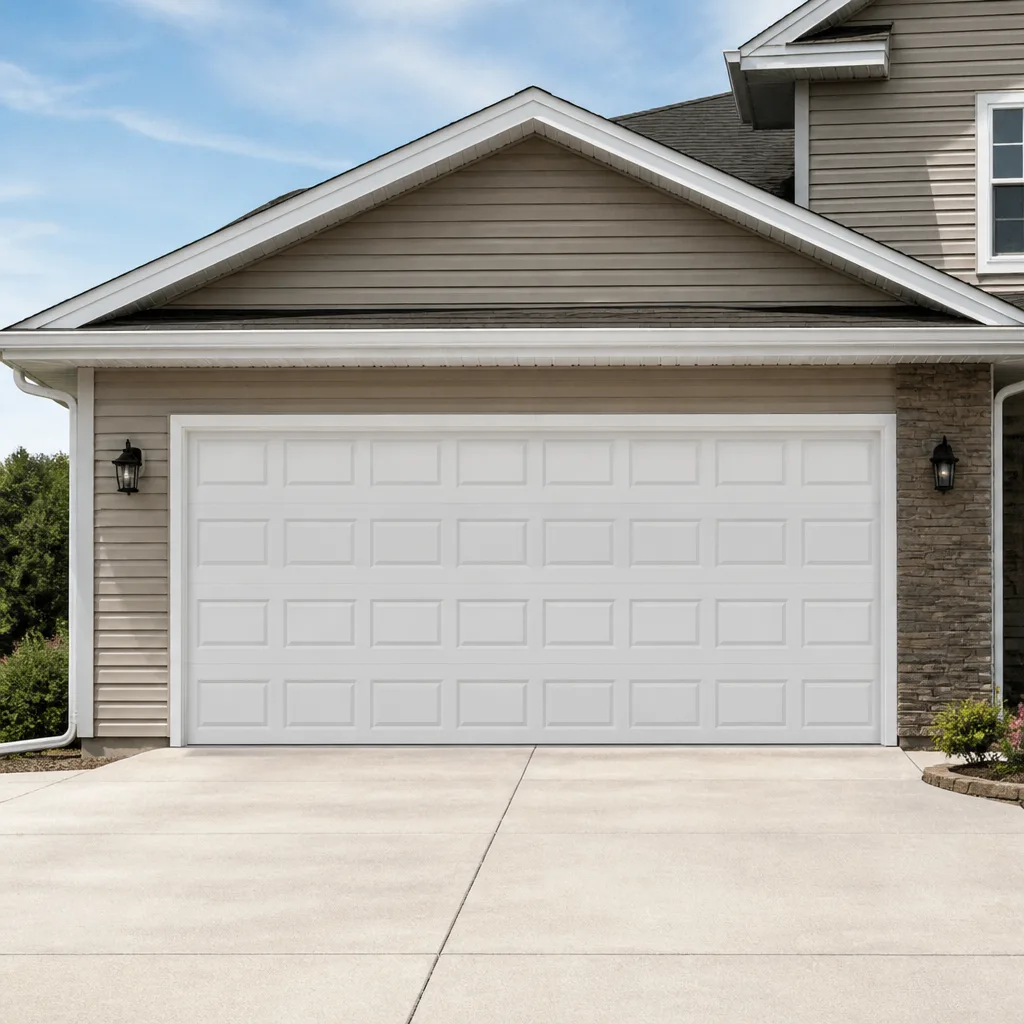 Raised-panel steel
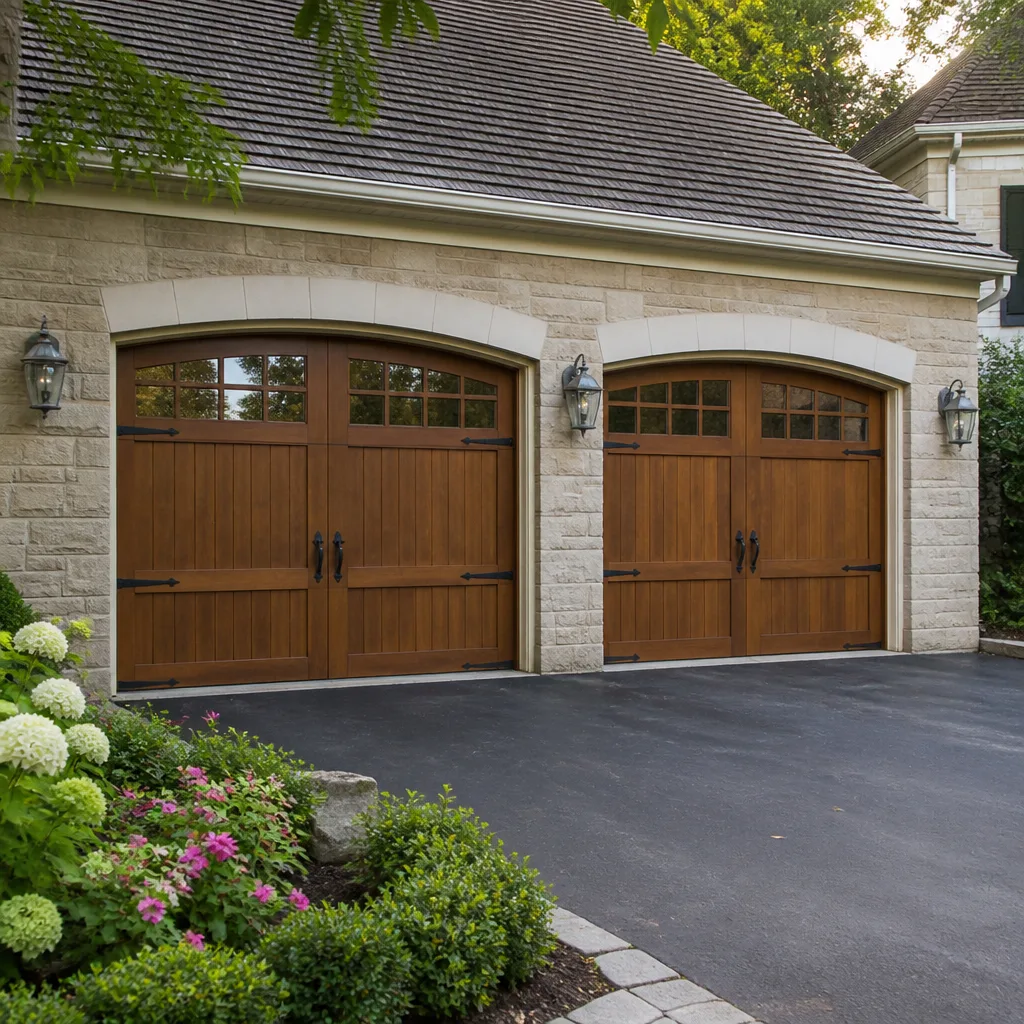 Carriage house
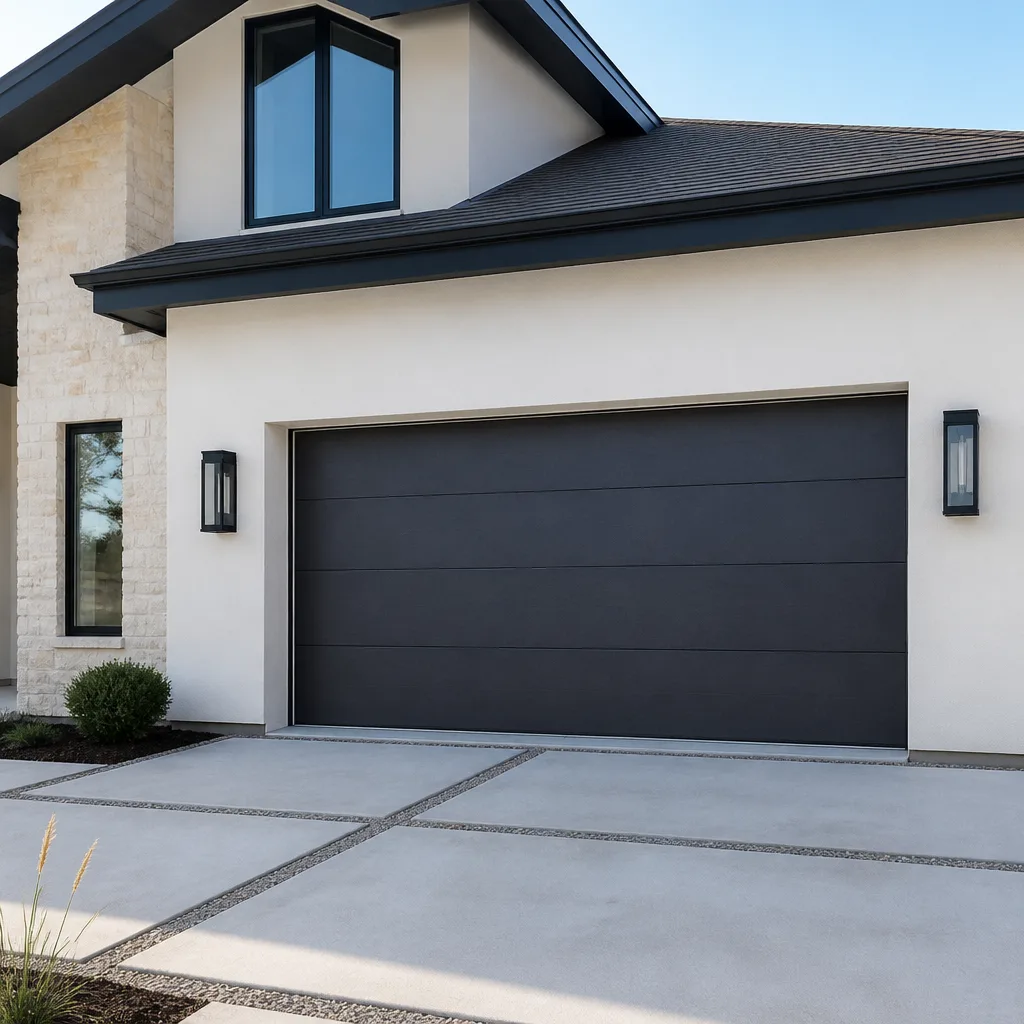 Modern flush
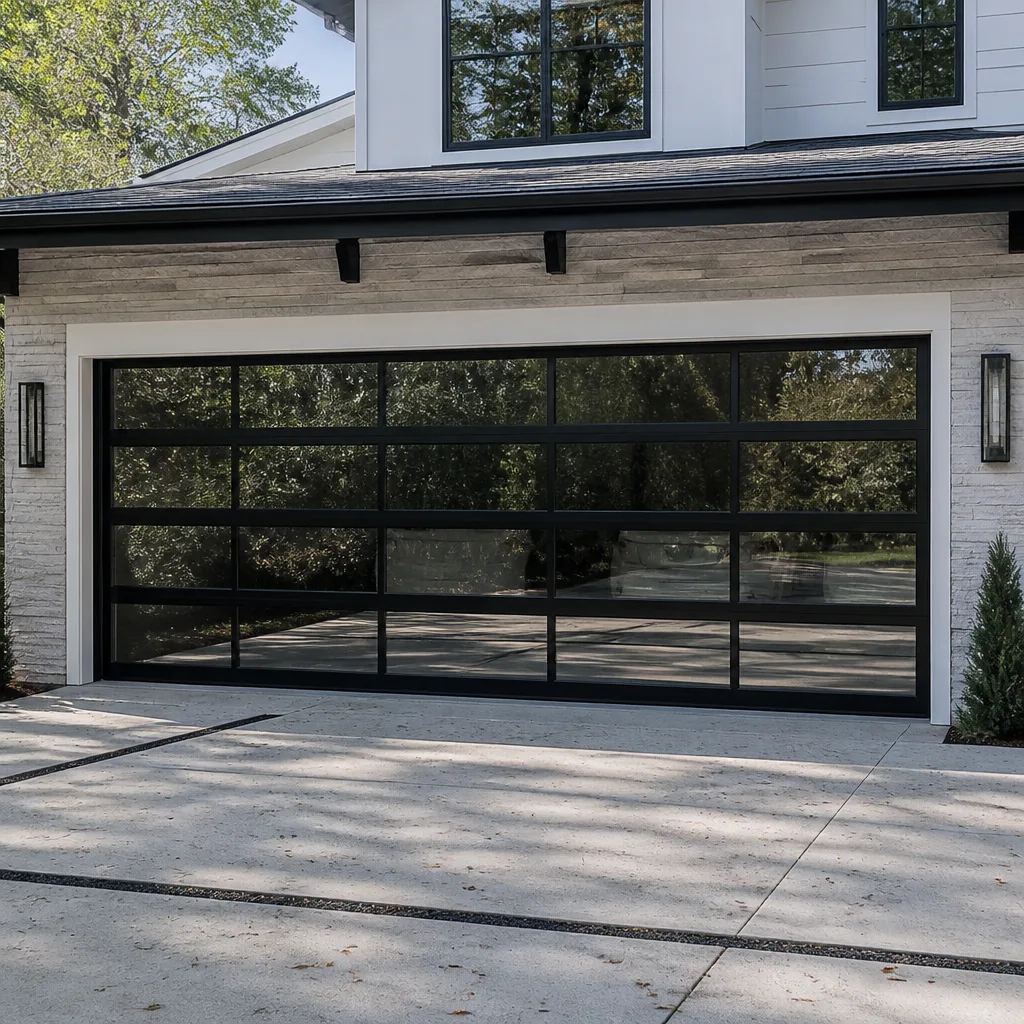 Full-view glass
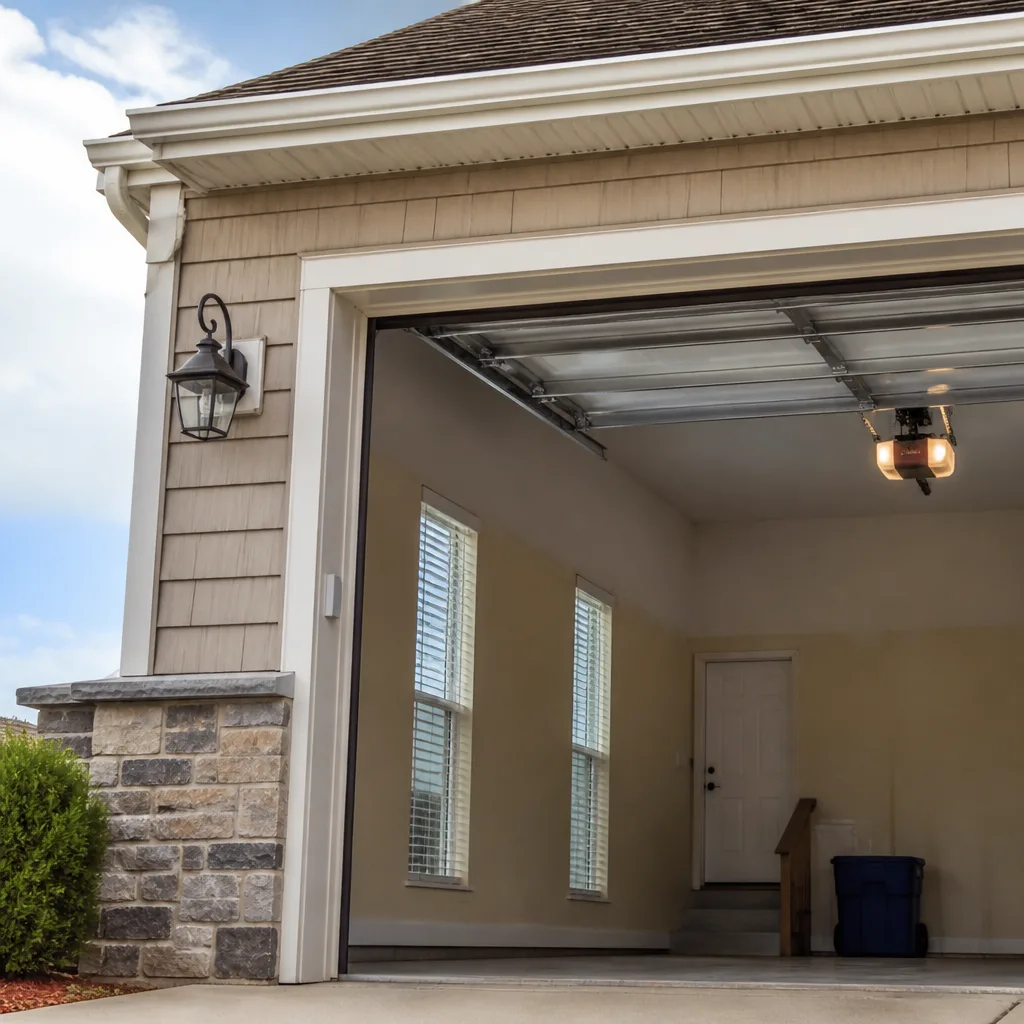 LiftMaster openers
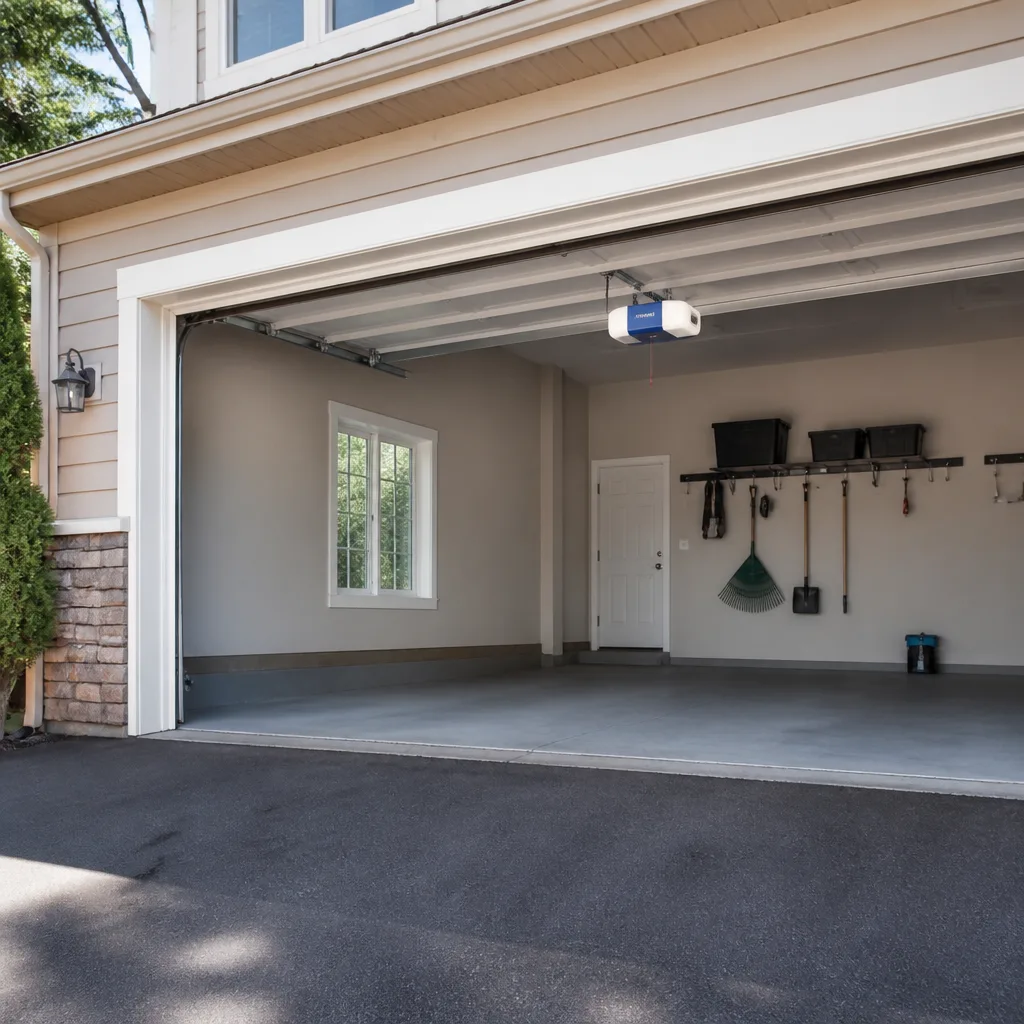 Chamberlain openers
Full 25-point door and opener safety check with every visit - springs, cables, rollers, tracks, and your LiftMaster or Chamberlain opener included
You get a price before we start. It does not change when the pro arrives.
Get your free estimateHow to Hire a Garage Door Contractor in Port Orange: A Step-by-Step Guide
Most people hire a garage door contractor the way they hire a plumber: someone’s door breaks, they search, they call the first name that shows up, and they let a stranger with a truck replace a spring or hang a new door. Here’s the uncomfortable part. In Florida, garage door work below a certain threshold doesn’t require a specialty contractor license, which means a person with a ladder and a business card can order your door, install it, collect a check, and leave you holding a warranty that’s void the moment they stop answering their phone. This guide walks you through what to check, what to ask, and what to put in writing so the contractor who shows up at your Port Orange home is actually accountable for the work. We’ll cover licensing verification, insurance gaps, storm-season red flags, and how to compare quotes that aren’t really quotes at all.
Quick Answer
To hire a garage door contractor in Port Orange, verify their license and insurance through Florida’s DBPR database, ask for the Florida Product Approval number on any door being ordered, get a written estimate that specifies spring grade and track type, and confirm who holds the warranty. Skip any of those steps and you’re relying on a handshake for a job that involves high-tension springs, roof-height installation, and a product that has to survive hurricane season. The right contractor will answer every one of these questions without hesitation.
Styles & brands we work with
- Raised-panel steel
- Carriage house
- Modern flush
- Full-view glass
- LiftMaster openers
- Chamberlain openers
Table of Contents
- Which Florida licenses apply to garage door work?
- Why general liability insurance isn’t enough
- Florida Product Approval before any door is ordered
- How to compare quotes when specs differ
- Storm-season red flags in Volusia County
- The questions to ask before you sign
- Common mistakes to avoid
- When to call a professional
Which Florida licenses apply to garage door work?
Florida does not require a specialty contractor license specifically for garage door work in every case. That surprises most homeowners. The state regulates licensed trades through the Department of Business and Professional Regulation, and garage door installation can fall under a general, building, or residential contractor license depending on the scope and the local jurisdiction. But not every job requires one, and that’s exactly where trouble begins. A person can legally offer “garage door repair” without holding a state license at all, and no one checks unless you do.
You can verify a contractor’s license in under two minutes. The DBPR maintains a public database at myfloridalicense.com. You search by name or license number and you’ll see the license type, its status, and any complaints or disciplinary actions on record. Here’s what to do:
- Ask for the contractor’s license number in writing, not just a card. A real contractor gives it without a pause.
- Search that number on the DBPR site. Confirm the license is active and matches the legal name on the estimate.
- Check the license type. Building and residential contractor licenses cover structural and installation work; a general license may or may not, depending on what your city requires.
- Call the City of Port Orange building department if you’re unsure whether your specific job needs a permit. They’ll tell you directly.
Some jobs don’t require a licensed contractor, and that’s fine. Replacing an opener or adjusting a track isn’t a structural project. But the bigger the job, the more the license matters, and a full door replacement in Port Orange is not something to hand to whoever answered the phone first. If a contractor can’t or won’t produce a license number when one’s required, you already have your answer.
Why general liability insurance isn’t enough
General liability insurance covers property damage. It does not necessarily cover the person doing the work if they’re injured on your property. That distinction matters enormously with garage doors, because torsion springs are one of the most dangerous components in residential construction. A wound torsion spring stores enough energy to break a bone or worse when it releases unexpectedly, and the wrong repair technique can make that release sudden and violent.
Here’s the scenario nobody thinks through until it happens. A contractor who isn’t carrying workers’ compensation insurance gets injured in your garage. Depending on how the claim unfolds, the injury falls back on the property owner because there’s no policy covering the worker. General liability won’t step in. Your homeowner’s policy might, and then you’re dealing with a rate increase and months of paperwork for a repair you paid for.
So when you hire for spring work, ask two separate questions:
- “Are you carrying general liability insurance?” Ask for the certificate of insurance, not just a verbal yes.
- “Are you carrying workers’ compensation coverage?” If the answer is “we’re a small operation,” that’s your signal to keep looking for a licensed, insured contractor.
We work with independent local professionals who are licensed and insured as their state requires, and we’d rather you ask the question twice than skip it. If a contractor brushes off the insurance question or promises to “send the paperwork later,” treat that as a no. Spring repair and installation are not repairs to hand off to someone who can’t document coverage. The safety caveat is real: high-tension springs should only be handled by a trained technician, and no guide, including this one, should ever walk a homeowner through compressing or releasing a torsion spring themselves.
Florida Product Approval before any door is ordered
Florida requires certain building products to carry a Florida Product Approval number before they can be installed on a structure, especially products that have to resist wind loads. Garage doors are one of those products. If a contractor orders a door and installs it without the proper approval for your wind zone, you may have a door your local inspector refuses to pass, or one that fails when it matters. In Volusia County, storm-season wind is a real consideration, and your door is the largest moving opening in your house.
Before anyone orders a door for your Port Orange home, ask for the Florida Product Approval number. The contractor should be able to give it to you in writing along with the manufacturer’s installation instructions. You can look the number up in the state’s approval database to confirm the product is listed and that the approval covers your application. The number isn’t a marketing detail. It’s the difference between a permitted installation and one that has to be torn out.
This is also where brand fluency matters. Doors from Clopay, Amarr, and Wayne Dalton all carry product approvals, but the specific model and the specific approval vary. A contractor who only sells one brand will push that brand whether or not it fits your opening and your approval needs. A technician who works across multiple brands can match the door to the job. Ask specifically: “Which model are you proposing, and what’s its product approval number for my wind zone?” A vague answer about “storm-rated” is not an answer. Florida Product Approval numbers are specific, and the contractor either has yours or doesn’t.
How to compare quotes when specs differ
Two quotes for the same job can look identical on the bottom line and be completely different jobs. One bid might spec a standard-gauge spring, the other an upgraded one. One might include new rollers and hinges, the other might reuse the originals. One might carry a one-year warranty, the other a lifetime warranty on certain parts. If you compare by price alone, you’ll pick the cheaper number and never know what you gave up until something fails.
Line up your quotes side by side using these categories. Any estimate that doesn’t break out these details isn’t detailed enough to compare:
- Spring grade and count. Is the quote for one spring or a matched pair? A pair is normally replaced together, and the price reflects two springs, not one.
- Track type and gauge. Standard vs. reinforced track changes the quote, and it changes how the door behaves in wind.
- Opener model and brand. If the job includes an opener, confirm the exact model, not just the brand. LiftMaster and Craftsman units vary widely by feature set.
- Hardware included. New rollers, hinges, cables, and bearings are wear parts. Ask what’s new and what’s reused.
- Warranty terms in writing. Separate labor from parts, and confirm whether the warranty transfers if you sell the house.
- Permit responsibility. Who pulls the permit, and is that cost included in the estimate?
- Cleanup and haul-away. Removing the old door and disposing of it is real work. Confirm it’s in the quote.
One more thing. On any cost question, the written estimate sets the final price. Get it in writing, with the scope spelled out, before any work starts. The price should be quoted and agreed before a technician touches the door. In our experience, the contractor who resists putting the scope in writing is the contractor you’ll argue with about the invoice later. If you’re weighing whether to repair or replace in Port Orange, the diagnosis matters more than the dollar figure, and a contractor who can’t tell you which springs and which track type they’re quoting hasn’t diagnosed anything.
Storm-season red flags in Volusia County
After a storm comes through Volusia County, contractors from out of state roll in with branded trucks, same-day availability, and prices that don’t match the local market. Some of them are legitimate. Many aren’t. The ones that aren’t share a pattern: they can’t produce a Florida license number, they want cash up front, they won’t give a written estimate, and they’ll be gone before the check clears. If it sounds like a warning from a consumer protection brochure, it’s a warning for a reason.
Specific red flags to watch for after a storm:
- Prices that swing wildly from quote to quote. Storm-season price-gouging has a tell: the same job quoted at wildly different numbers with no explanation of what’s different.
- No written estimate, just a verbal price. A legitimate contractor gives you the scope and the price in writing, and the price doesn’t change when they arrive.
- Cash only, or full payment upfront. A deposit is normal. Full payment before the door is even ordered is not.
- Out-of-state plates and no local license. Check the DBPR database before you sign. If the license is suspended or nonexistent, walk away.
- Pressure to decide today. A door that’s been damaged for a week is not an emergency at 6 p.m. on the last day of a “special.”
- “We’ll handle the permit.” Ask for the permit number. If they can’t produce one, they aren’t pulling one.
We’ve seen this pattern in Port Orange enough times to recognize it early. The right way to handle storm damage is boring: verify the license, get the estimate in writing, confirm the product approval number, and let the contractor know you expect the price to match the quote. If your door is stuck open or won’t close, that’s an emergency, and we’d tell you to call. But let the contractor earn the emergency, not manufacture one.
The questions to ask before you sign
Here’s the short list. Take these to any contractor, and if they can’t answer every one, keep looking. A good technician answers without hesitation because these are the questions they ask themselves. A bad one gets defensive or vague. Either response tells you what you need to know.
- “What’s your license number and can you send the certificate of insurance today?” If either is missing or delayed, that’s your answer.
- “Are you quoting one spring or a matched pair?” A pair is standard when both springs are original equipment, and the price reflects both.
- “What’s the Florida Product Approval number on the door you’re proposing?” No number, no order.
- “Is this an estimate or a firm price, and what would make it change?” The written estimate sets the price, and a good contractor explains what would change it before the work starts.
- “What brands do you work on, and are you certified on my opener?” Smart openers from LiftMaster and others need a technician who knows the system, not just the brand name.
- “What’s the warranty on parts and on labor, and does it transfer?” Get it in writing.
- “Who pulls the permit, and is it in this price?” A permit is a document, not a promise.
- “What’s not included in this quote?” The answer to this one tells you more than the estimate does.
Ask a final question too: “If you find something else wrong once you’re in there, what happens?” The right answer is that they stop, show you the problem, and quote the additional work before doing any of it. We’d rather you ask that question of every contractor, including us, than find out afterward. If a garage door spring repair turns into a track issue, you should know about it before the price moves, not after.
Common Mistakes to Avoid
- Hiring the first name that answers. Search results reward whoever answers the phone fastest, not whoever does the best work. Take an hour to verify the license before you commit to a Port Orange job.
- Skipping the DBPR check because the contractor “seems fine.” Two minutes at myfloridalicense.com will tell you more about a contractor than an hour of conversation. If the license is suspended or missing, the conversation is over.
- Comparing quotes without comparing specs. A cheap quote for a lighter spring and reused rollers isn’t cheaper. It’s a different job with a shorter lifespan.
- Letting the contractor order a door without the product approval number. This is the mistake that gets installations flagged at inspection and doors torn back out. Confirming the approval before the order goes in is the job.
- Paying in full before the door is delivered. Deposits are normal. Full payment before the materials are on site is how people lose money to a contractor who doesn’t come back.
- Assuming the warranty covers labor. Parts warranties and labor warranties are separate. Ask for both, in writing, and confirm who honors them if the company is gone in a year.
- Treating storm-season quotes like normal quotes. After a storm, out-of-county contractors appear in Volusia County with prices that don’t line up with the market. Verify the license first, and expect the price to be in writing.
- Letting anyone touch a torsion spring without confirming what they’re doing. These springs store dangerous energy, and this repair isn’t a do-it-yourself job. A technician who treats it casually is a technician you should send home.
When to Call a Professional
Some garage door problems are annoying. Others are dangerous, and the line between the two is closer than it looks. Call a professional when a torsion spring breaks (a loud snap followed by a door that won’t lift), when the door won’t close or reverses on its own, when a cable comes loose or hangs slack, when the opener runs but the door doesn’t move, or when you see the door hanging unevenly at the top of the frame. Any of those can indicate a spring or cable issue that should only be handled by a trained technician, and in Port Orange, a door stuck open isn’t only inconvenient, it’s a security problem for the house.
Port Orange Garage Door Repair Pros offers free estimates in Port Orange. Call (877) 735-4535. We answer 24/7. Fast dispatch from 7am to 7pm, Sunday through Friday. Our technicians have up to 9 years of experience, and they work on the brands you actually own: LiftMaster, Chamberlain, Genie, Clopay, Amarr, Wayne Dalton, Craftsman, and Raynor. If your door fails at a bad time, we’d rather get you scheduled correctly than have you guess. For a full door replacement or new installation, we’ll set up a free measure and a written price, because that work is measured, ordered, and scheduled, not rushed.
See the difference
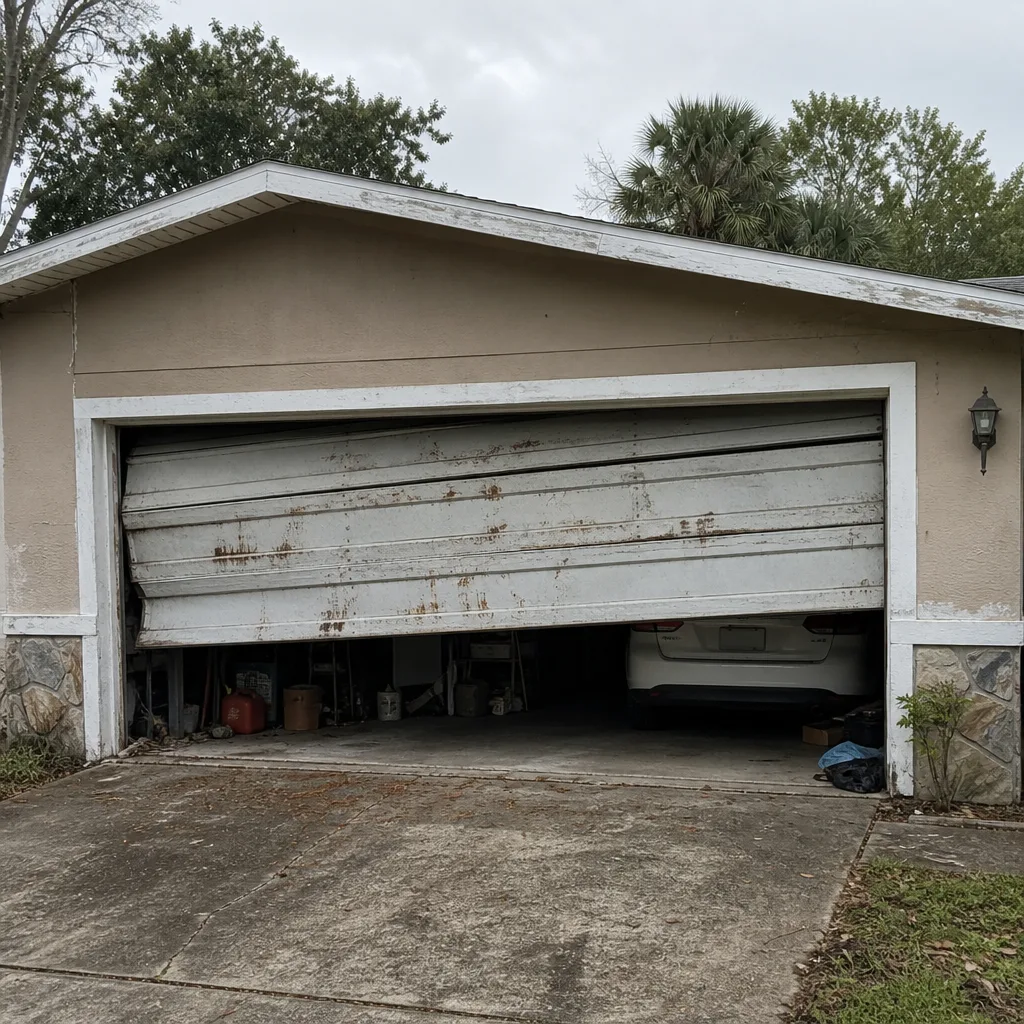 Before
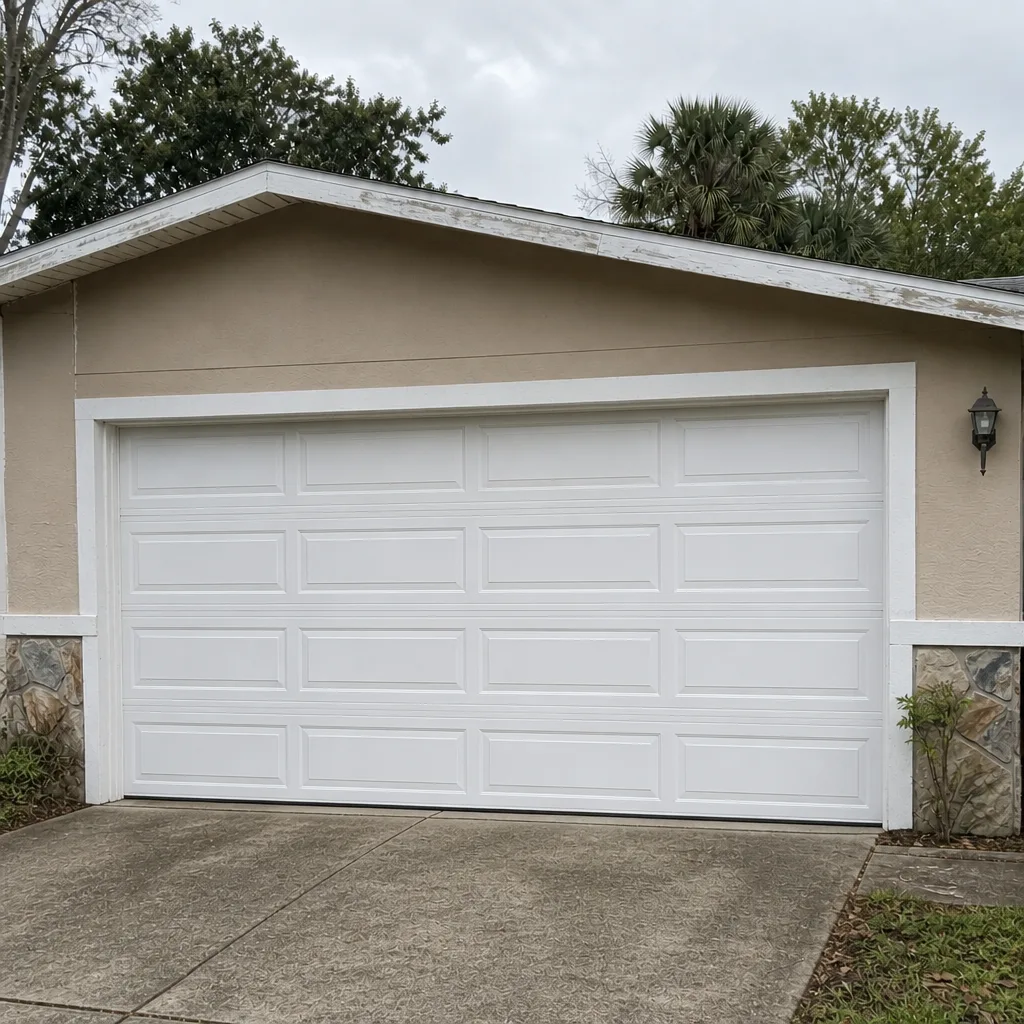 After
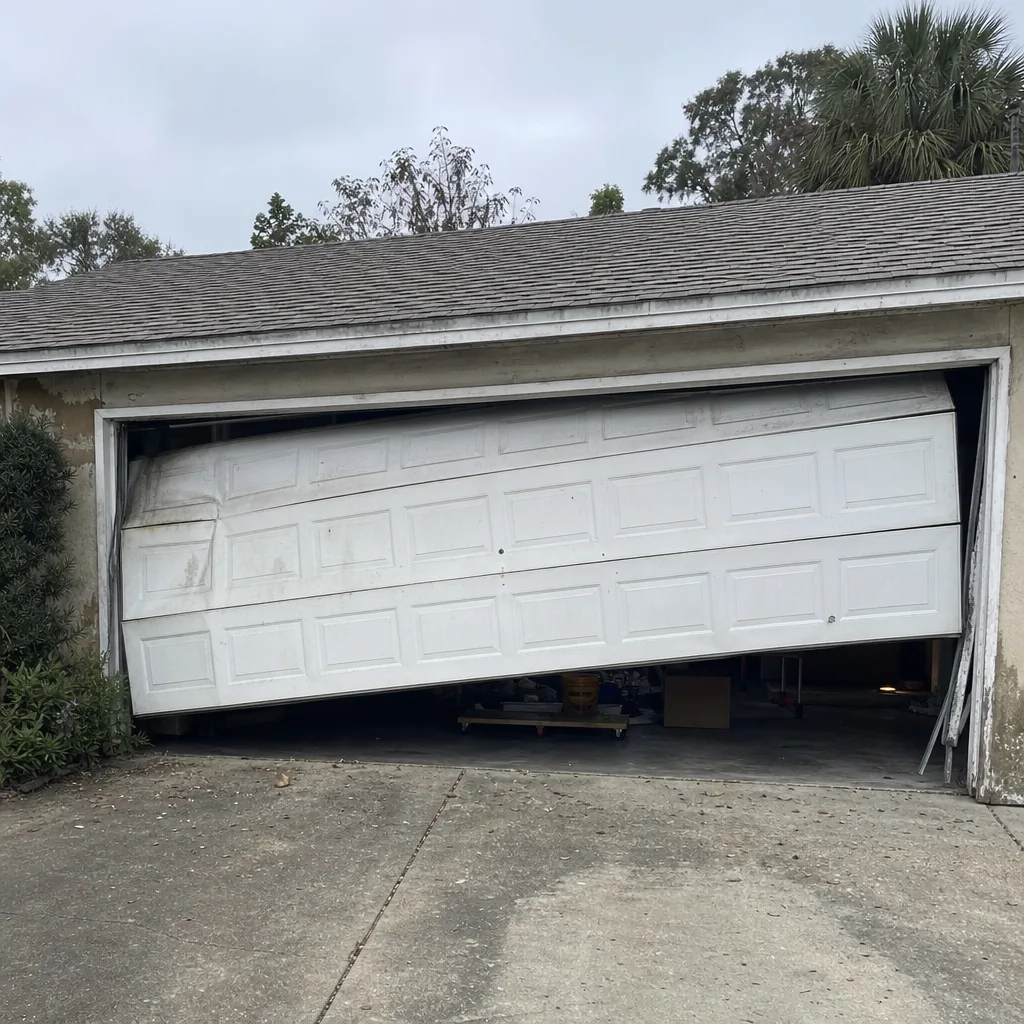 Before
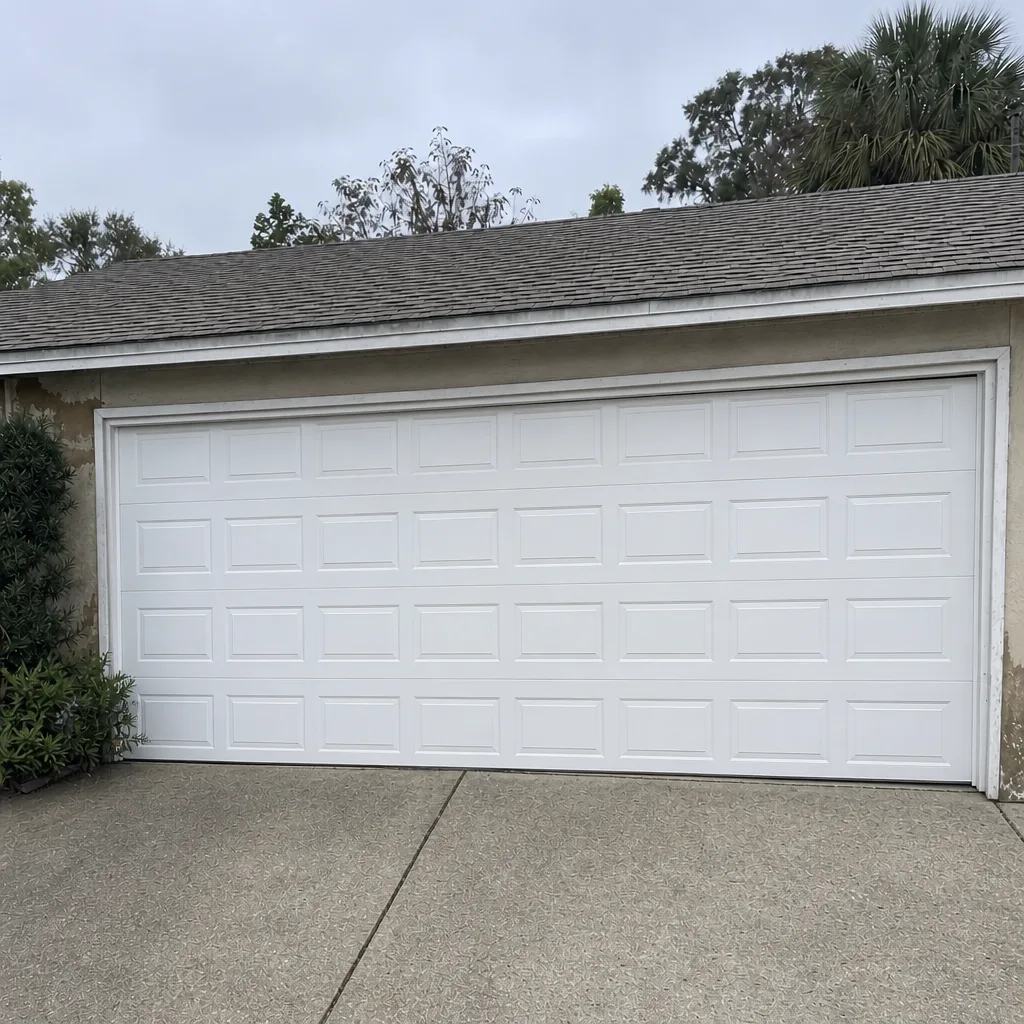 After
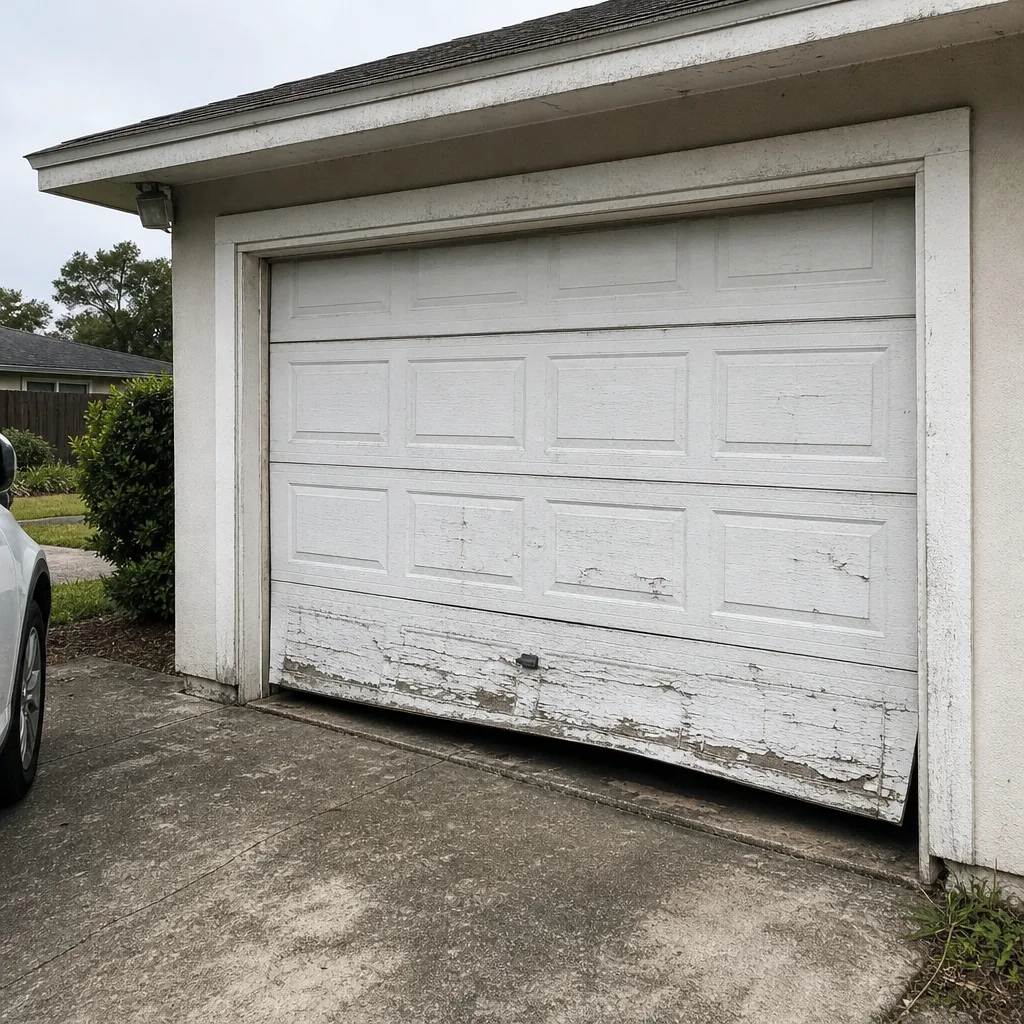 Before
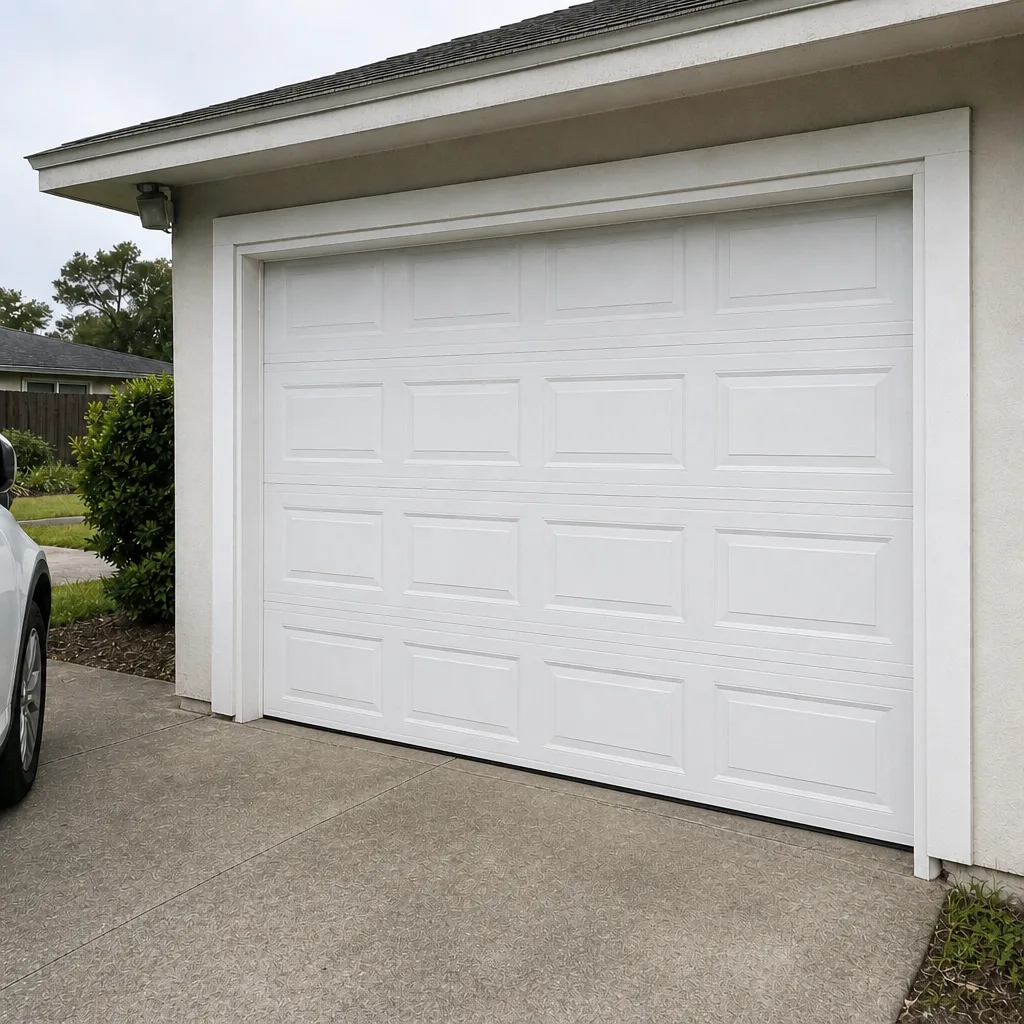 After
Frequently Asked Questions
Look up the contractor’s license number in Florida’s DBPR database at myfloridalicense.com. Ask for the number in writing, search it, confirm the status is active, and make sure the name on the license matches the name on your estimate. If you’re unsure whether your specific job requires a license, call the City of Port Orange building department and ask directly. Call (877) 735-4535 if you’d like us to walk you through what your job needs – estimates are free.
Florida does not require a specialty contractor license specifically for all garage door work. Some jobs fall under a general, building, or residential contractor license, and others don’t require a state license at all. That gap is exactly why you have to verify on your own. When a job requires a licensed contractor, ask for the number and confirm it through DBPR before any work starts. Call (877) 735-4535 for a free estimate, and we’ll tell you what your specific job calls for.
A Florida Product Approval number confirms a building product has been evaluated for the conditions it will face in Florida, including wind. Doors installed without the correct approval for your wind zone can fail inspection or fail in a storm. Ask for the number in writing before anyone orders your door, and look it up in the state’s approval database. If a contractor can’t produce it, don’t order. Call (877) 735-4535 for a free estimate and a written price on a properly approved door.
No, not when the estimate is written correctly. A proper written estimate specifies the scope, the parts, and the price, and that price is quoted and agreed before any work starts. The only time a price should change is if the technician finds something outside the original scope, and in that case they should stop, show you the problem, and quote the additional work before doing it. Call (877) 735-4535 for a free estimate – you’ll get the scope and the price in writing first.
In many cases, yes. A door that won’t close is an emergency for security reasons, and same-day service is a core part of what we do for Port Orange homeowners. Call (877) 735-4535. We answer 24/7. Fast dispatch from 7am to 7pm, Sunday through Friday. Our technicians have up to 9 years of experience and handle spring repair, opener repair, and emergency calls as standard work, not add-ons.
Ask for the warranty in writing and separate the parts warranty from the labor warranty. Confirm how long each lasts and whether it transfers if you sell the house. Also ask who honors the warranty if the company that installed the door is no longer around, because that’s the question nobody thinks to ask until they need it. Call (877) 735-4535 for a free estimate – we’ll spell out the warranty terms before any work begins.
The Bottom Line
Hiring a garage door contractor in Port Orange comes down to four checks: verify the license through Florida’s DBPR database, confirm both general liability and workers’ compensation coverage, ask for the Florida Product Approval number before any door is ordered, and compare quotes by spec, not just by price. Do those four things and you’ll avoid the unwarrantied installation, the storm-season price swing, and the spring repair that should have been a different job. If your door fails, call (877) 735-4535. We answer 24/7. Fast dispatch from 7am to 7pm, Sunday through Friday. Port Orange Garage Door Repair Pros offers free estimates and a written price before any work starts. If you want to understand the repair side in more detail first, start with garage door repair, and if your opener is the problem, garage door opener repair covers what to expect. You can also read about Port Orange Garage Door Repair Pros and how we work with homeowners here.
Written by the team at Port Orange Garage Door Repair Pros.